

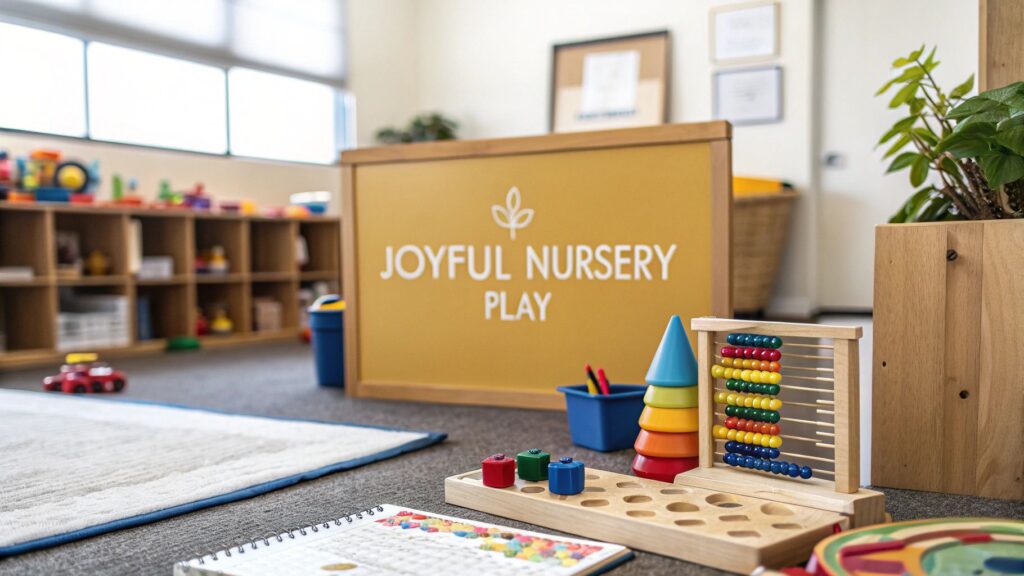
Welcome to my personal collection of the most impactful activities in nurseries. As an early years practitioner with over a decade of hands-on experience, I’ve seen firsthand which activities truly light up a child’s world and lay the foundation for lifelong learning. This isn’t a generic list; it’s a curated roundup born from countless hours of observation, laughter, and learning alongside the children I’ve had the privilege to care for. Each idea shared here isn’t just theory—it’s a proven, beloved part of a high-quality early years environment.
I firmly believe that the best play is purposeful, engaging, and deeply connected to a child’s developmental stage. From messy sensory explorations that build neural pathways to imaginative dramatic play that nurtures empathy, every activity has a vital role. For instance, exploring big emotions through storytelling can be profoundly effective; for inspiring this, I often turn to a guide on the timeless magic of Where the Wild Things Are.
In this guide, I’ll walk you through eight powerful types of nursery activities, sharing the ‘why’ behind the play, practical setup tips, and personal insights to bring them to life. Whether you’re a fellow early years professional seeking fresh inspiration or a parent wanting to understand the magic behind a nursery day, this guide offers actionable, heartfelt guidance.
1. Sensory Play Activities
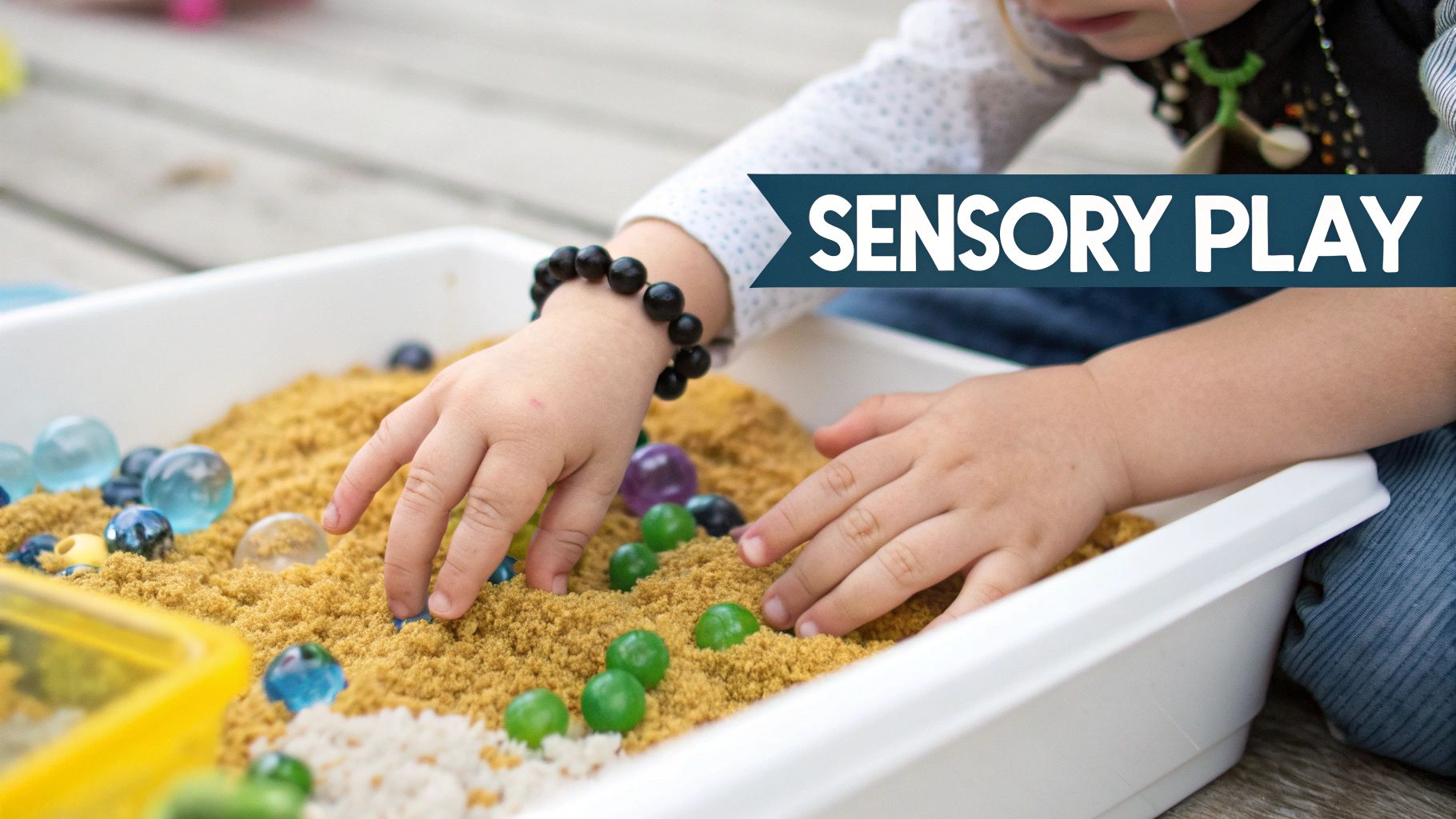
Sensory play is the cornerstone of early childhood development, providing a hands-on, multi-sensory approach to learning. This method encourages children to engage their senses of touch, sight, sound, smell, and even taste in a structured yet exploratory environment. By manipulating various materials and textures, children build crucial neural connections that support cognitive growth, language development, and motor skills. In my experience, it’s one of the most foundational and effective activities in nurseries for helping young minds make sense of the world around them.
Why It’s Effective
Sensory exploration is not just about fun; it’s a powerful tool for learning. It helps children develop sensory processing skills, enabling them to filter and organise the constant stream of sensory information they receive. This process supports everything from concentration and problem-solving to emotional regulation. When I see a child squishing playdough or pouring rice, I know they are conducting small experiments that teach cause and effect, volume, and texture.
Practical Implementation
Setting up a sensory station can be simple yet incredibly impactful. I’ve found that a well-organised sensory area invites curiosity and independent play, making it a beloved feature in any nursery setting.
- Sensory Bins: Use shallow tubs filled with non-toxic materials like dyed rice, dried pasta, sand, or water beads. I always add tools like scoops, funnels, and tongs to enhance fine motor practice.
- Texture Boards: Create a “touch-and-feel” wall or board with squares of different materials, such as sandpaper, faux fur, silk, and bubble wrap. It’s a fantastic way to introduce varied tactile experiences.
- Playdough and Clay: Provide homemade or commercial playdough along with rollers, cutters, and natural items like leaves and twigs for creative modelling and strengthening hand muscles.
Key Insight: My top priority is always safety. I make sure to use age-appropriate, non-toxic materials and supervise children during play. It’s also important to respect a child’s sensory preferences; I never force participation if a child feels overwhelmed by a particular texture or sound.
For caregivers seeking a wider array of engaging ideas, exploring these essential sensory activities can offer fresh inspiration to stimulate all five senses in a playful, educational manner.
2. Nature-Based Learning
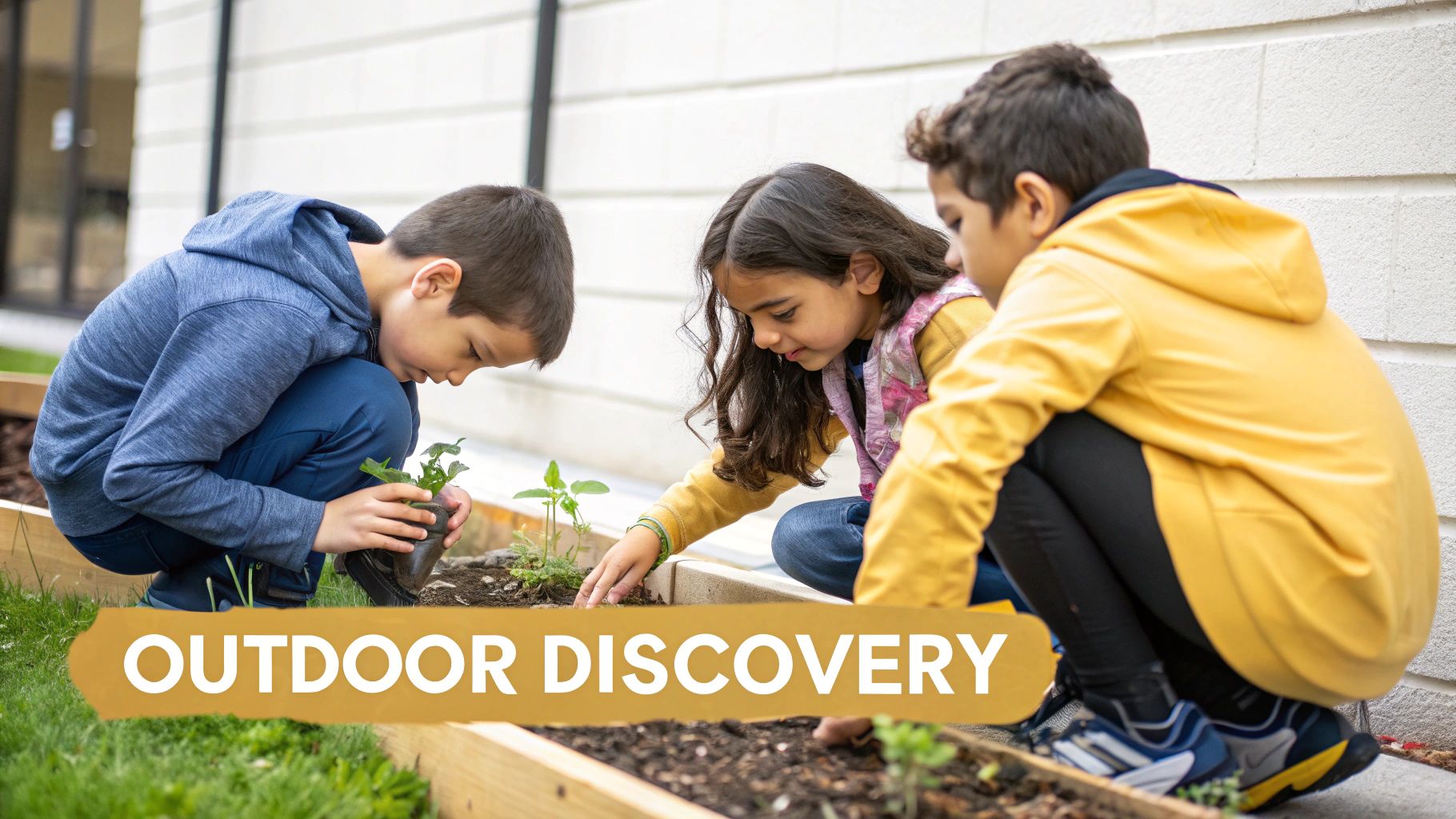
Nature-based learning connects children to the natural world, using our outdoor environments as dynamic, living classrooms. This educational approach encourages direct interaction with plants, animals, and weather, fostering a sense of wonder and environmental stewardship from a young age. By moving learning outside, I’ve watched children develop resilience, curiosity, and a profound appreciation for nature. It is one of the most enriching activities in nurseries for promoting both physical health and scientific thinking.
Why It’s Effective
Learning in nature offers unique sensory experiences that simply cannot be replicated indoors. The feel of soil, the sound of birds, and the sight of a sprouting seed provide tangible lessons in biology, physics, and ecology. This approach supports holistic development by improving gross motor skills through climbing and running, enhancing problem-solving abilities as children navigate natural obstacles, and boosting well-being through fresh air and open space.
Practical Implementation
Creating an engaging outdoor learning environment is key to fostering a love for nature. I’ve learned that even a small patch of earth can be transformed into a hub of discovery with thoughtful planning and a few simple resources.
- Children’s Garden: Designate a small plot for a vegetable or herb garden where children can plant seeds, water them, and watch them grow. This teaches responsibility and the origins of food in a very real way.
- Bug Hunts: I love equipping children with magnifying glasses and observation jars for gentle “bug hunts” to study insects and other small creatures. It’s a wonderful way to encourage respect for all living things.
- Nature Scavenger Hunts: Create lists of natural treasures for children to find, such as a smooth stone, a colourful leaf, or a Y-shaped twig. This sharpens observation skills and introduces seasonal changes.
Key Insight: My advice is to ensure outdoor spaces are safe and accessible in all weathers. Teach children about plant and insect safety, such as identifying nettles or knowing not to disturb a wasp nest. Adapting activities to the seasons keeps the curriculum fresh and relevant.
For families and educators inspired by this approach, the Forest School Association provides a wealth of information and resources on embedding this powerful learning philosophy into daily practice.
3. Dramatic Play Centres
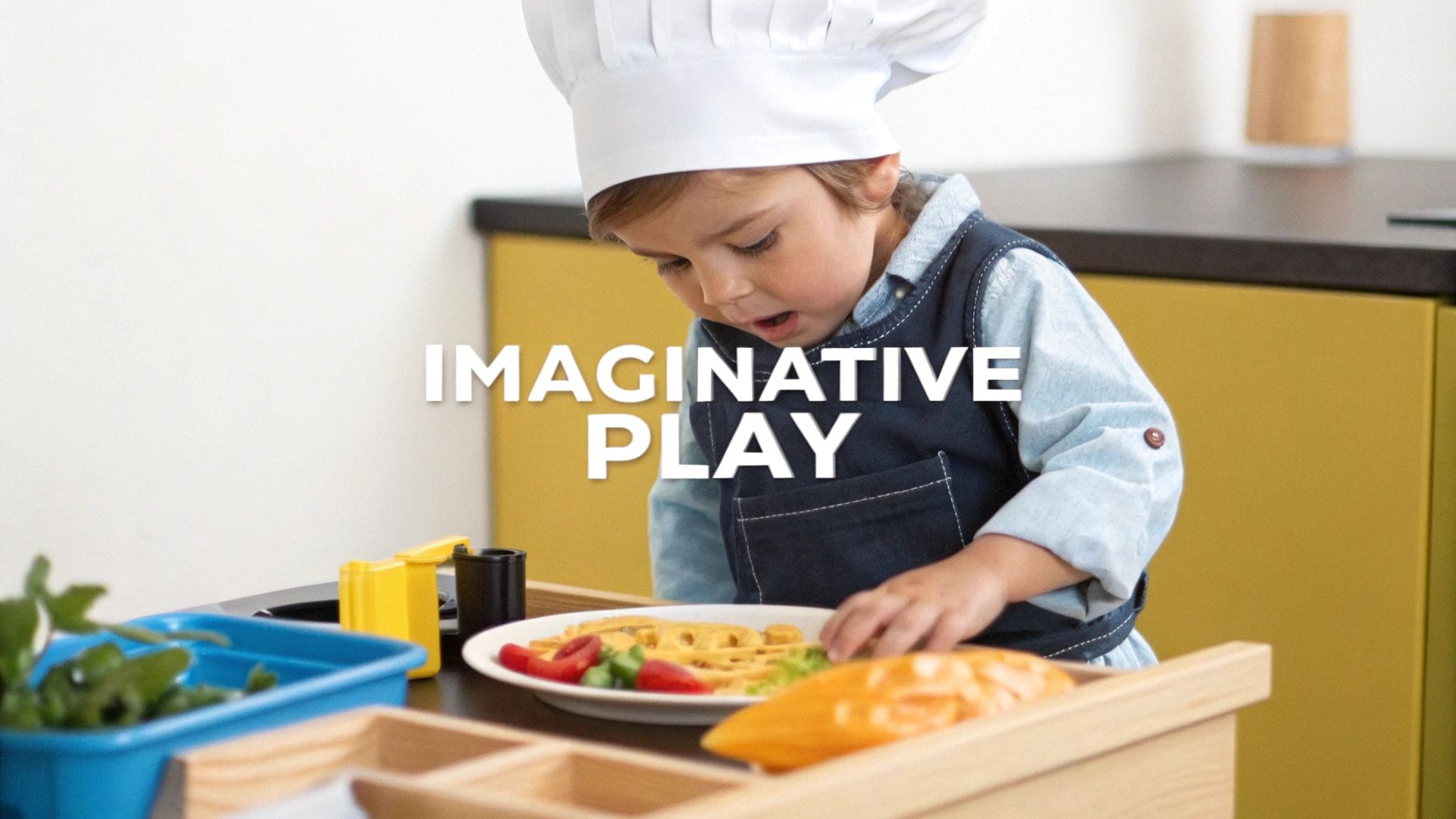
Dramatic play centres are dedicated spaces where children can explore and act out a variety of roles and scenarios using their imagination. I equip these themed areas with props, costumes, and other materials to create immersive environments that mimic real-world situations or fantastical worlds. By stepping into different roles, such as a doctor, a chef, or an explorer, children develop social skills, emotional intelligence, and complex problem-solving abilities. It’s a powerful method that turns imaginative play into one of the most enriching learning activities in nurseries.
Why It’s Effective
Dramatic play provides a safe and supportive context for children to process their experiences, practice social interactions, and develop empathy. When children pretend to be someone else, they are experimenting with language, negotiation, and cooperation as they navigate their created storylines. From personal observation, this form of play strengthens narrative skills, builds vocabulary, and allows children to understand different perspectives, laying a crucial foundation for both social and academic success.
Practical Implementation
Creating a captivating dramatic play centre involves thoughtful planning and rotating themes to keep children engaged. The key, in my view, is to provide a mix of realistic and open-ended props that inspire creativity and child-led narratives.
- Restaurant or Café: Set up tables, chairs, and a kitchen area with play food, menus, and a toy cash register. This encourages turn-taking, literacy through reading and writing orders, and basic numeracy skills.
- Doctor’s Surgery: Include dress-up coats, stethoscopes, bandages, and clipboards. I find this scenario helps children understand healthcare roles, process any anxieties about medical visits, and practise empathy and caring behaviours.
- Construction Site: Provide hard hats, high-visibility vests, large cardboard boxes for building, and toy tools. This theme promotes teamwork, spatial awareness, and large motor skill development.
Key Insight: My secret to keeping things fresh is to rotate the themes of the dramatic play centre every few weeks based on the children’s current interests or learning topics. Adding literacy elements like signs, labels, and notepads enriches the experience and seamlessly integrates reading and writing into their play.
For families and caregivers looking to foster this type of creativity, the ideas shared by early years education experts like Vivian Paley can provide deeper insights into the power of storytelling and pretend play in a child’s development.
4. Art and Creative Expression
Art and creative expression are vital activities in nurseries that champion the journey of creation over the final product. This approach, heavily influenced by philosophies like Reggio Emilia, encourages children to explore materials, experiment with techniques, and express their unique perspectives without pressure or predefined outcomes. In my classroom, this means we focus on “process art,” where children build self-esteem, develop problem-solving abilities, and refine their fine motor skills, laying a foundation for a lifetime of creativity and confident self-expression.

Why It’s Effective
Focusing on the process allows children to experience the pure joy of creating. It removes the fear of “getting it wrong” and instead fosters curiosity, resilience, and imagination. When I watch a child mix colours to see what happens or glue various textures onto paper, I see them not just making a picture, but conducting scientific experiments, making decisions, and communicating their ideas visually. This builds cognitive flexibility and gives them a powerful outlet for their emotions and thoughts.
Practical Implementation
Creating an environment that nurtures artistic exploration involves providing accessible, open-ended materials and a supportive atmosphere. A dedicated art area or “atelier” invites children to engage with materials freely and purposefully, making it a cornerstone of a well-rounded nursery curriculum.
- Process-Art Stations: I love to set up invitations to create, such as finger painting on large paper sheets, collage-making with natural materials like leaves and twigs, or chalk drawing on outdoor surfaces.
- Three-Dimensional Exploration: Offer clay, playdough, and recycled materials like boxes and tubes for sculpting. This encourages spatial awareness and develops hand strength and dexterity.
- Mixed-Media Projects: Provide a variety of materials at once, such as paint, crayons, fabric scraps, and glue, allowing children to combine textures and colours in innovative ways.
Key Insight: I see my role as a facilitator, not a director. I ask open-ended questions like, “Tell me about the colours you used,” to encourage dialogue about their work. I make a point to celebrate every child’s effort by proudly displaying their creations, reinforcing the value of their individual creative process.
5. Music and Movement Activities
Music and movement activities integrate song, dance, and instrument play to create a dynamic learning environment that energises both mind and body. This approach uses rhythm and melody as a vehicle for developing physical coordination, cognitive skills, and social-emotional awareness. By combining auditory stimulation with physical expression, children are encouraged to listen, follow directions, and express themselves creatively. These integrated experiences are some of the most joyful and effective activities in nurseries, transforming learning into a vibrant, full-bodied adventure.
Why It’s Effective
Combining music with movement capitalises on a child’s natural inclination to respond physically to sound. This synergy strengthens the brain-body connection, enhancing gross motor skills, balance, and spatial awareness. I’ve personally seen how singing songs helps expand vocabulary and improve memory recall, while group dancing fosters cooperation and a sense of community. Following rhythms and musical patterns also lays a foundational understanding of mathematical concepts and sequencing.
Practical Implementation
Creating a rich musical environment is about more than just playing a CD; it’s about active, participatory engagement. A well-planned music and movement session can captivate children and embed learning in a memorable way.
- Action Songs and Rhymes: I always use classic circle time songs like “Wheels on the Bus” or “Head, Shoulders, Knees and Toes” that involve specific actions, helping children connect words with physical gestures.
- Instrument Orchestras: Provide simple percussion instruments like shakers, tambourines, and drums. Encourage children to explore sounds, keep a beat, or create sound effects for a story.
- Parachute Play: Use a large play parachute with rhythmic music to encourage synchronised movement, teamwork, and listening skills as children lift, lower, and shake it together.
- Cultural Exploration: I love introducing music and dance from different cultures to broaden children’s global awareness and expose them to diverse rhythms and musical styles.
Key Insight: To ensure inclusivity, I offer varied activities. I provide visual cues for auditory instructions, offer instruments with different volumes, and create a quiet corner for children who may feel overstimulated by loud sounds. Connecting songs to daily routines, like a “tidy-up” song, makes transitions smoother and more enjoyable.
For those inspired by structured musical education, exploring the principles of the Orff Schulwerk approach can provide a deeper framework for integrating music, movement, and speech in a developmentally appropriate way.
6. STEM Exploration Activities
STEM exploration introduces young children to the foundational concepts of Science, Technology, Engineering, and Maths in an accessible, play-based format. These activities are designed to spark curiosity and encourage critical thinking from a very early age. Through my own practice, I’ve found that by engaging in hands-on experiments and problem-solving challenges, children learn to ask questions, observe outcomes, and draw conclusions. This inquiry-based approach makes complex ideas tangible and fun, establishing a positive relationship with subjects that are vital for future learning.
Why It’s Effective
Introducing STEM concepts early helps to demystify science and maths, framing them as exciting tools for discovery rather than intimidating subjects. These activities promote crucial skills such as logical reasoning, problem-solving, and creativity. When a child builds a tower that keeps falling over, they are learning about gravity and structural integrity in a practical way. This process nurtures persistence and resilience, teaching them that “mistakes” are valuable learning opportunities.
Practical Implementation
Integrating STEM into daily nursery life is simpler than it sounds and requires minimal specialised equipment. I always remind myself that the focus should be on exploration and the process of discovery, not just on achieving a specific outcome.
- Building Challenges: Provide a variety of materials like wooden blocks, magnetic tiles, or even recycled cardboard boxes and tubes. I might challenge the children to build the tallest tower, the strongest bridge, or a ramp for a toy car.
- Simple Science Experiments: Conduct a “sink or float” investigation using a water table and various objects from around the room. We also love planting bean seeds in clear containers to observe the germination process and document their growth.
- Colour Mixing Stations: Set up a station with water, droppers, and non-toxic food colouring or paints. Allowing children to experiment with mixing primary colours to create secondary ones fosters an understanding of basic chemistry.
Key Insight: My role here is to be a co-explorer, not an instructor. I ask open-ended questions like “What do you think will happen if…?” or “Why do you think that happened?” to guide their thinking without giving them the answers.
For a deeper dive into early years science, the Boston Children’s Museum offers extensive resources that show how everyday play can be turned into a powerful STEM learning experience.
7. Social-Emotional Learning Games
Social-emotional learning (SEL) provides the essential toolkit children need to navigate their inner worlds and build positive relationships with others. My approach is to use structured games and guided interactions to help children identify their feelings, understand where they come from, and learn healthy ways to manage them. By fostering empathy, communication, and cooperation, SEL activities in nurseries build a strong foundation for emotional intelligence, resilience, and social competence, which are critical for life-long success and well-being.
Why It’s Effective
Social-emotional learning is far more than just teaching children to be “nice”; I know from experience that it is fundamental to cognitive development. When children feel emotionally secure and understood, they are better equipped to focus, learn, and solve problems. These games teach vital life skills, such as turn-taking, sharing, and resolving conflicts peacefully. By giving emotions a name and a context, children learn that their feelings are valid and manageable, which reduces anxiety and promotes a positive self-concept.
Practical Implementation
Integrating SEL into the daily nursery routine can be achieved through thoughtful, intentional activities that feel like play. Creating an emotionally safe environment is the first and most important step for me.
- Emotion Identification Cards: I use flashcards with different facial expressions (happy, sad, angry, surprised) to help children label and discuss feelings, asking questions like, “What do you think made this person feel sad?”
- Friendship Circles: I dedicate time each day for children to sit in a circle and share something positive about a classmate or talk about a time they felt helpful.
- Cooperative Building Projects: Provide blocks, LEGOs, or other construction toys and set a group goal, such as building the tallest tower. This encourages teamwork, communication, and shared problem-solving.
Key Insight: My role as caregiver is crucial. I consciously model empathy and emotional regulation by calmly talking through my own feelings. Acknowledging and validating every child’s emotions, even challenging ones, creates a space of trust and emotional safety.
For those interested in the foundational theories, the work of Daniel Goleman on Emotional Intelligence and the frameworks developed by CASEL provide a deeper understanding of the principles behind these impactful nursery activities.
8. Language and Literacy Development
Language and literacy development forms the bedrock of a child’s future academic success and social communication. My focus is always on nurturing early language acquisition and pre-reading skills through immersive, play-based experiences. By creating a print-rich environment and integrating literacy into daily routines, I aim to foster a genuine love for stories, words, and self-expression. These foundational activities in nurseries are crucial for building the confidence and competence children need to become effective communicators.
Why It’s Effective
Early exposure to language and literacy concepts in a meaningful context is paramount for brain development. I’ve seen countless times how activities like interactive storytelling, rhyming games, and mark-making help children develop phonemic awareness—the ability to hear and manipulate individual sounds in words—which is a key predictor of later reading success. It supports vocabulary expansion, listening comprehension, and narrative skills, transforming abstract symbols into a powerful tool for understanding and interacting with the world.
Practical Implementation
Integrating literacy into the nursery environment should feel natural and engaging, making it a constant and enjoyable part of a child’s day. A well-resourced literacy area encourages both independent exploration and guided learning.
- Interactive Story Time: I use puppets, props, and actions to bring stories to life. I encourage children to predict what happens next, discuss characters’ feelings, and retell the story in their own words.
- Writing and Mark-Making Centre: It’s important to offer a variety of tools like chunky crayons, chalk, paintbrushes, and different surfaces such as easels, chalkboards, and paper of various textures to inspire emergent writing.
- Phonics and Rhyming Games: We often play simple sound games like “I Spy” with letter sounds, sing rhyming songs, and read rhyming books to build phonological awareness in a fun, accessible way.
- Environmental Print: I label items and areas around the room with both words and pictures. I also involve children in creating signs, lists, and messages for classroom activities.
Key Insight: I always focus on the process, not the product. I celebrate all forms of mark-making and “invented spelling” as legitimate steps toward conventional writing. The goal is to build confidence and a positive association with literacy, not to achieve perfect letter formation or spelling at this early stage.
Nursery Activities Comparison Matrix
| Learning Approach | Implementation Complexity 🔄 | Resource Requirements ⚡ | Expected Outcomes 📊 | Ideal Use Cases 💡 | Key Advantages ⭐ |
|---|---|---|---|---|---|
| Sensory Play Activities | Moderate – materials prep and supervision needed | Moderate – variety of tactile materials; replacements required | Enhanced sensory integration, cognitive development, fine motor skills | Early childhood sensory development, children with sensory needs | Multi-sensory engagement; supports emotional regulation and creativity |
| Nature-Based Learning | Moderate – depends on outdoor space and weather | Moderate to high – outdoor space, gardening tools, weather kits | Improved physical health, environmental awareness, observational skills | Outdoor exploration, environmental education | Promotes physical activity and environmental consciousness |
| Dramatic Play Centers | High – setup, rotation, and maintenance of props | High – props, costumes, space, frequent updates | Language, social skills, confidence, problem-solving | Role-play, social-emotional learning | Fosters communication, creativity, and social-emotional intelligence |
| Art and Creative Expression | Moderate – setup and cleanup, ventilation considerations | Moderate – art supplies, some can be costly | Fine motor skills, self-expression, emotional processing | Creative exploration, emotional support | Encourages creativity, process focus, and visual-spatial skills |
| Music and Movement Activities | Moderate – space and instruments needed | Moderate – simple instruments, diverse music selections | Motor skills, language development, memory, social skills | Group activities, cultural exposure | Combines physical and cognitive development; culturally enriching |
| STEM Exploration Activities | High – requires specialized tools, safety training | High – scientific materials, supervision, staff training | Critical thinking, scientific method understanding, math foundations | Inquiry-based learning, early STEM foundations | Builds curiosity, analytical skills, and problem-solving abilities |
| Social-Emotional Learning Games | Moderate – ongoing reinforcement needed | Low to moderate – learning tools, consistent staff approach | Emotional regulation, empathy, communication skills | Emotional intelligence development, cooperative play | Enhances social skills, emotional awareness, and relationship building |
| Language & Literacy Development | High – extensive materials and skilled staff | High – books, literacy resources, multilingual materials | Reading/writing foundations, vocabulary, communication | Early literacy, language acquisition | Builds communication, literacy readiness, and cultural awareness |
Bringing It All Together: Cultivating a Thriving Nursery Environment
My journey through sensory bins, nature trails, and imaginative play centres has revealed a profound truth: the most effective activities in nurseries are never just about passing the time. They are the fundamental building blocks of early development, carefully chosen and thoughtfully presented to nurture a child’s holistic growth. From the fine motor precision developed while threading beads in an art session to the complex social negotiations happening in a dramatic play corner, each activity serves a critical purpose.
I’ve explored how a simple walk in the garden can transform into a STEM lesson on ecosystems, and how music and movement can become a powerful tool for emotional expression. The common thread weaving through all these diverse experiences is the principle of intentionality. It’s about seeing the potential in a cardboard box, understanding the science behind messy play, and recognising the language skills being built during a simple puppet show.
Key Takeaways for a Dynamic Learning Space
Mastering the art of a vibrant nursery environment involves more than just a checklist of activities. It requires a shift in perspective—my perspective—viewing every moment as an opportunity for learning and connection.
- Integration is Paramount: The true magic happens when activities flow into one another. A child might find a unique leaf on a nature walk (Nature-Based Learning), use it for a texture rubbing (Art), and then invent a story about the creature that lives under the leaf (Language and Literacy). This creates a cohesive and deeply engaging learning narrative.
- Observation is Your Compass: The most impactful activities are those tailored to a child’s current interests and developmental stage. As a caregiver, noticing a child’s fascination with pouring and transferring allows me to introduce water play or sand tables, directly responding to and extending that child’s natural curiosity.
- The Environment as the Third Teacher: A well-organised space with accessible, inviting materials empowers children to make choices and direct their own learning. The setup itself, from low-level shelves to clearly defined play zones, communicates possibilities and encourages exploration.
Ultimately, my goal is always to create a nurturing ecosystem where children feel safe, seen, and inspired. It’s an environment built on responsive caregiving, where I act as a facilitator, a co-discoverer, and a trusted guide. By thoughtfully implementing a rich variety of activities in nurseries, whether in a group setting or a private home, we lay the foundation for a lifelong love of learning. These early experiences don’t just shape a child’s skills; they shape their confidence, their curiosity, and their entire perception of the world.
Finding a childcare professional who intuitively understands how to orchestrate these enriching experiences can be transformative for a family. At Superstar Nannies, we connect families with elite nannies and governesses who are experts in curating bespoke, developmentally-focused activities right in your home. Discover how our vetted professionals can create an exceptional learning environment for your child at Superstar Nannies.