


When you first type “childcare hiring near me” into a search bar, you’re starting a journey that’s about so much more than just filling a role. You’re looking for someone to entrust with your children, someone who will become a part of the fabric of your family’s life. As someone who has walked this path with countless families, I know this search isn’t just a task—it’s a deeply personal mission to find a professional who truly connects with your values and your home.
The Honest Truth About Finding Elite Childcare Near You

From my years of experience helping families just like yours, I can tell you that the UK childcare market is fiercely competitive. It’s easy to feel overwhelmed, not just because the stakes are so high for your family, but because of the genuine challenges we’re seeing across the industry. Let me be frank: the old-fashioned method of just posting an ad online rarely attracts the calibre of talent that discerning households need.
Why is that? Because the most gifted and dedicated professionals I know are seldom scrolling through public job boards. They’re found through trusted networks and specialist agencies that understand their unique skills and have taken the time to get to know them.
Navigating National Staffing Shortages
It’s so important to have a realistic view from the start, and that means being aware of the current climate. Right now, the UK’s childcare sector is facing a significant workforce crisis, which has a very real impact on the availability of truly qualified candidates. This isn’t just a feeling; the data tells the story.
A recent survey showed that nearly 70% of childcare providers felt they didn’t have enough staff to operate properly. This widespread shortage means that the very best professionals are in higher demand than ever. The Department for Education even estimates that around 36,000 new staff members are needed just to meet the growing demand for childcare places.
This scarcity of elite talent means families must be more thoughtful and competitive in their search. I’ve learned that finding the right person for your home is an active pursuit, not a passive one.
The Unique Beat of Your Household
Your family is unique. High-calibre childcare for a busy, private family goes far beyond just keeping an eye on things. It requires a professional who instinctively understands discretion, can gracefully handle complex schedules, and often has very specialised skills. These personal requirements naturally narrow the pool of suitable candidates even further.
To succeed, you have to shift your mindset. I encourage my clients to think of this process as an investment in their family’s happiness and stability. It demands a proactive, thoughtful strategy that shows top candidates why your home is a wonderful place to work.
This is where, for many families I’ve worked with, the expertise of a dedicated agency becomes a game-changer. Partnering with specialists can simplify the entire journey, giving you access to an incredible, pre-vetted network of candidates you’d never find otherwise. To learn more about this path, you can explore the benefits of hiring a professional nanny agency in our detailed guide. Getting this right from the very beginning makes all the difference.
Defining What Your Family Truly Needs
Before you even start your search, the most important work happens right at home. It all starts with painting an honest, detailed picture of your family—not just a checklist of duties, but a real reflection of your lifestyle, your values, and the unique rhythm of your household. From my experience, getting this first step right is what separates a frustrating, drawn-out search from a successful and joyful one.
I always tell my clients to think of this initial brief as their North Star. It will guide every decision you make, help you filter candidates with clarity, and ultimately attract professionals who won’t just be doing a job, but will genuinely flourish as part of your family’s world. A generic job description just won’t do.
Moving Beyond the Basics
To build a profile that truly resonates, you need to go much deeper than just listing schedules and responsibilities. The real magic happens when you can articulate the unspoken rules and the specific energy of your home. This level of detail prevents so many misunderstandings later on and ensures you find a professional whose personal approach aligns with your own.
Start by thinking about these crucial areas:
- Parenting Philosophy: Are you a family that follows a specific method, like Montessori or RIE? Or do you favour a more relaxed, play-based approach over a structured educational routine? Be honest about what matters to you.
- Daily Rhythms: What does a day in your life really look like? Get specific about your feelings on screen time, your expectations around mealtimes, and how you handle nap schedules.
- Household Atmosphere: Is your home a formal, structured environment, or is it more relaxed and casual? This is one of the most critical elements for finding the right personality fit.
I once worked with a wonderful family whose entire philosophy was built around outdoor, nature-based play. By making this crystal clear in their brief, they immediately attracted nannies who were passionate about forest schools and outdoor adventures. It was a perfect match before the first interview even took place because they had been so true to themselves.
Must-Haves Versus Nice-to-Haves
One of the most helpful things you can do is to separate your absolute, non-negotiable requirements from the qualities that would be lovely to have but are ultimately flexible. This simple exercise stops you from accidentally overlooking a fantastic candidate because of a minor preference.
A classic mistake I see is families creating an impossibly long list of ‘must-haves’. A truly effective brief focuses on the core skills and personality traits that will genuinely impact your children’s well-being and the harmony of your home.
Create two very distinct lists. This will bring incredible focus to your search.
Your Non-Negotiables Might Include:
- A spotless driving record and total confidence driving in the city.
- Up-to-date paediatric first aid and CPR certifications.
- Proven experience with specific needs, like severe allergies or learning differences.
- A genuine willingness to travel internationally with the family several times a year.
Your Nice-to-Haves Could Be:
- Fluency in a second language.
- A particular talent for cooking healthy, child-friendly meals.
- A background in music or the creative arts.
This distinction is also fundamental when deciding on the type of role you need to fill. Understanding whether your family’s schedule points towards a live-in, live-out, or rota nanny is a foundational decision. If you’re still weighing the options, our guide on choosing between a live-in nanny, live-out nanny, or rota nanny can offer some much-needed clarity.
By defining all of this upfront, you’re not just writing a job description; you’re building a solid foundation for a successful and lasting professional relationship.
How to Find and Vet Top-Tier Childcare Candidates
With a clear picture of what your family needs, it’s time to start the search. But when you’re looking for truly exceptional talent, a simple “childcare hiring near me” search won’t cut it. The best professionals in this field are rarely scrolling through public job boards; they’re typically found through more discreet, specialised channels.
For most of the families I work with, this boils down to two main avenues: partnering with a specialist boutique agency or leveraging your own private network. Each has its own rhythm and set of benefits, and the best path for you often depends on your timeline, budget, and how hands-on you want to be.
The differences in time, cost, and outcome between these two approaches can be quite stark.
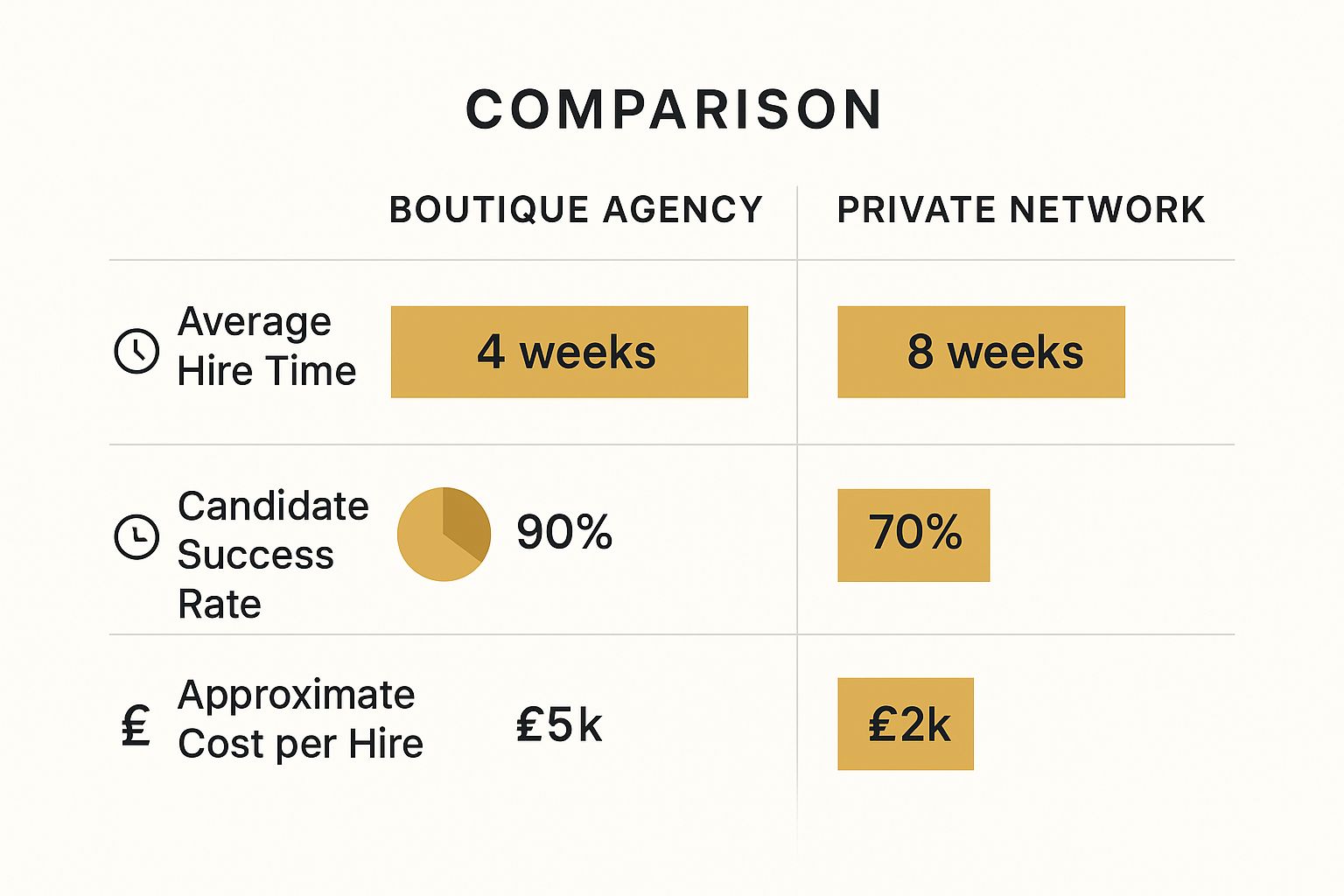
As you can see, an agency often delivers a faster, more reliable result. On the other hand, a search through your personal network can be more cost-effective, provided you have the right connections and the time to manage the entire process yourself.
To help you decide, let’s look at the main sourcing channels side-by-side.
Candidate Sourcing Channels Comparison
| Sourcing Channel | Best For | Potential Drawbacks | Typical Cost |
|---|---|---|---|
| Boutique Nanny Agencies | Families needing a fast, discreet, and highly vetted search with access to top-tier, unlisted candidates. | Higher upfront cost (placement fees can be 15-25% of the annual salary). | £8,000 – £15,000+ |
| Private Networks/Referrals | Families with extensive, trusted connections who prefer a personal recommendation and have time for a slower search. | Limited candidate pool; potential for awkwardness if the placement doesn’t work out. | £0 (or a thank-you gift) |
| Premium Online Platforms | Tech-savvy families who want to manage the search themselves but need access to a curated pool of professionals. | Requires significant time for screening and vetting; quality can be inconsistent. | £100 – £300 subscription fees |
| Direct Advertising (e.g., The Lady) | Reaching a very traditional, often highly experienced demographic of career childcare professionals. | Slower response times; requires managing all inquiries and screening from scratch. | £150 – £500+ per advert |
Ultimately, choosing the right channel is about balancing speed, cost, and the level of personal effort you’re willing to invest in the search.
Conducting Interviews That Reveal True Character
The interview is your chance to move beyond the CV and really connect with the person who could become an integral part of your family’s life. From my experience, the standard, tired questions just don’t work. I’ve always found it better to focus on practical, scenario-based questions that show you who they really are.
Anyone can prepare a polished answer for, “What are your strengths?” It’s far more revealing to ask something like, “Imagine my four-year-old has a complete meltdown in the middle of Waitrose because he wants a chocolate bar. What do you do?” Their response tells you volumes about their approach to discipline, their capacity for empathy, and how they handle stress in a very public setting.
The goal isn’t to catch them out but to see how their instincts and values align with yours. You’re looking for compatibility in real-world situations, not just a perfect on-paper profile.
A great interview should feel less like an interrogation and more like a natural conversation. For a little more inspiration, our article on powerful interview questions for nannies can help you get beneath the surface.
The Non-Negotiable Vetting Process
Once you’ve found a candidate you connect with, the final step is a rigorous vetting process. This is the one area where you simply cannot afford to cut corners. Your peace of mind depends on it.
Your checklist needs to be thorough, confirming every qualification and personally speaking with every reference.
Essential Background Checks Checklist:
- Enhanced DBS Check: Verify they hold an up-to-date certificate from the Disclosure and Barring Service.
- Paediatric First Aid: Ensure their certification is current and was issued by a reputable training body.
- Reference Verification: Personally call at least two recent employers. Ask detailed, open-ended questions about their performance, reliability, and character.
- Identity and Right to Work: Physically check their passport and any relevant visas to confirm they are legally entitled to work in the UK.
This verification stage is absolutely critical. The UK childcare sector is expanding to meet demand, with government figures showing that between 2024 and 2025, private providers increased their staff by 5.1%, while the number of qualified childminders grew by an impressive 37.1%. With this influx of new professionals, a robust vetting process is more important than ever to ensure you’re hiring the best of the best.
By combining strategic sourcing with insightful interviews and an uncompromising vetting process, you can move forward with confidence, knowing you’ve found not just a qualified professional, but the perfect addition to your family.
Crafting an Ironclad Employment Contract
You’ve found the perfect person. It’s a huge relief, and it’s tempting to feel like the search is finally over. But hold on. The final legal steps are what truly cement this promising match into a secure, professional, and lasting relationship. From my experience, the best placements are always built on a foundation of mutual understanding and absolute legal clarity.
This is where a comprehensive employment contract comes in. It’s far more than a formality; it’s the bedrock document that protects both your family and your new employee. It spells out every expectation and sets clear boundaries from day one, heading off potential misunderstandings before they can even start.
Core Components Under UK Law
Every contract you issue must be fully compliant with UK employment law, creating a fair and clear framework for your professional relationship. To get this right, you need to craft a robust employment contract.
Having overseen countless successful placements, I can tell you these are the non-negotiable clauses you absolutely must include:
- Duties and Responsibilities: Be incredibly specific here. Detail everything from core childcare tasks to any light housekeeping, cooking, or travel duties that you’ve agreed upon.
- Hours of Work: Clearly state the standard working hours, which days of the week are required, and how any ad-hoc babysitting or overtime will be handled.
- Compensation: Detail the gross salary, the pay frequency (e.g., weekly or monthly), and the exact rate and method for compensating overtime.
- Holiday Entitlement: Specify the number of paid holiday days per year (in line with UK statutory minimums) and outline the process for booking time off.
- Sick Pay and Procedure: Explain your policy for sick leave, including how and when they should notify you, and their entitlement to Statutory Sick Pay (SSP) or any enhanced contractual pay you offer.
Protecting Your Family’s Privacy
For private families, certain clauses aren’t just important—they are essential for your peace of mind and security. By its very nature, in-home childcare means your employee will become privy to the inner workings of your life.
A Non-Disclosure Agreement (NDA) is a non-negotiable component of any employment contract for a UHNW family. It legally binds the employee to confidentiality regarding all private family matters, both during and after their employment.
A clear and specific social media policy is also vital in this day and age. This clause should explicitly state what can and cannot be shared online, particularly anything concerning your children, your home, or your family’s activities. It’s a simple measure that protects your children’s privacy and your family’s security in a world of constant digital connection.
Managing Payroll and Pensions
As an employer in the UK, you are legally responsible for managing PAYE (Pay As You Earn), which covers income tax and National Insurance contributions. You must also handle pension auto-enrolment for any eligible staff.
I know this can feel like a complex and daunting area, but getting it right is fundamental to being a good, ethical employer. Many families I work with choose to delegate this to a specialist nanny payroll service. These services handle all the calculations, payslips, and submissions to HMRC, ensuring you remain fully compliant without the administrative headache. It professionalises the entire arrangement right from the start.
Building Success with a Thoughtful Onboarding Process
The contract is signed and you’ve found a fantastic professional. This is a huge milestone, but from my experience, the work is only just beginning. The first 90 days are the single best predictor of a long and successful placement.
A supportive, structured onboarding period is your opportunity to turn a great hire into a truly integrated member of your household team. It’s about more than just showing them where the nappies are; it’s about creating a foundation of trust, mutual respect, and clear communication from day one. Investing this time upfront prevents countless friction points down the road.
The First 90 Days: A Proven Framework
After placing hundreds of candidates, I’ve seen time and again what makes a new hire stick. It comes down to a solid 90-day framework that helps seamlessly integrate a new caregiver into a family’s unique rhythm. A well-structured new hire onboarding process is absolutely critical, laying the groundwork for a lasting and positive relationship. The goal here is simple: build confidence and establish a strong professional partnership.
This initial phase truly sets the tone. While the UK childcare workforce is substantial, with an estimated 629,900 people employed in the third quarter of 2024, finding and retaining the right person for your family requires this dedicated effort. Those figures have actually seen a slight decline, which just highlights how important it is to make your home a place where top professionals want to stay and thrive.
Key Steps for a Seamless Integration
To make this period as smooth as possible, focus on clear, practical actions rather than assumptions. This proactive approach ensures your new nanny feels valued, supported, and fully equipped to succeed in their role right from the start.
- Create a Living Household Manual: Think of this as your family’s playbook. Document everything from emergency contacts and allergy protocols to your children’s favourite bedtime stories and your unwritten rules about screen time. It should be a dynamic, helpful guide they can refer to every day, not a dusty rulebook.
- Establish Regular Check-ins: I always advise scheduling brief, weekly check-ins for the first month, then moving to fortnightly. These aren’t stuffy performance reviews. Instead, they are protected moments for open, two-way dialogue. Ask what’s going well, what challenges they’re facing, and what support they need from you.
- Set Professional Boundaries Respectfully: Right from the start, be clear about your expectations. This includes communication outside of working hours, the use of personal phones, and any guest policies. Establishing these boundaries early, and with respect, maintains a professional dynamic and prevents future awkwardness for everyone.
By investing your energy in a thoughtful onboarding, you are not just managing an employee; you are nurturing a partnership. This process empowers your new nanny to perform their best, which ultimately brings harmony and stability to your home and children.
Answering Your Key Questions on Hiring Childcare
Stepping into the world of in-home childcare naturally brings up a lot of questions. Over the years, I’ve found that most families share similar concerns as they begin the journey of finding the right person for their home. To give you a bit more confidence in your search, I’ve compiled answers to the questions I’m asked most frequently.
How Much Should I Expect to Pay for a High-Calibre Nanny in the UK?
This is usually the first question on everyone’s mind. The truth is, salaries for elite nannies can swing quite a bit depending on a few key things: where you live (London commands the highest rates), the candidate’s depth of experience and qualifications, and exactly what the role entails.
As a solid benchmark, a top-tier live-out nanny in a major city like London typically earns between £14 and £20+ net per hour.
A critical point to get right from the start is clarifying whether your agreed salary is ‘gross’ (before tax) or ‘net’ (the nanny’s take-home pay). It’s a common source of confusion. Also, remember you’re an employer, so you’ll need to budget for National Insurance contributions, pension auto-enrolment, and potentially the fees for a payroll service. Factoring these in from day one prevents any nasty surprises down the line.
What Is the Difference Between a Nanny, a Governess, and a Childminder?
While people sometimes use these titles interchangeably, they refer to very different roles. Getting the distinction right is the first step to hiring the professional who truly fits your family’s needs.
- A Nanny: This is someone you employ to care for your children in your home. Their focus is on the children’s daily needs, development, and overall well-being.
- A Governess: Think of a governess as a home-based educator. They often have formal teaching qualifications and concentrate on academics, etiquette, and a more structured approach to development.
- A Childminder: This is a self-employed professional who looks after children from several different families in their own home. They must be registered with Ofsted (in England).
How Should We Structure a Paid Trial Period?
A paid trial is an absolute must. It’s the best, lowest-risk way for everyone involved to see if the connection is really there before signing a long-term contract. In my experience, a trial anywhere from a few days to a full week is usually enough to get a good feel.
The idea is to have the candidate perform the main duties of the job while you observe them in action. How do they engage with your children? How do they adapt to your family’s rhythm? Set some clear objectives for the trial beforehand and make sure to schedule a chat at the end to discuss how it went. It’s also vital to have a temporary contract in place that outlines payment and terms for this period, keeping you fully compliant with UK employment law.
Trust your gut during the trial. You’re not just assessing skills; you’re seeing if their personality and values truly click with your family’s dynamic in a real, unscripted way.
What Red Flags Should I Watch for During an Interview?
Often, the biggest red flags are the subtle ones. I always tell my clients to pay attention to any vagueness about past positions or unexplained gaps in their CV. If a candidate doesn’t ask you thoughtful questions about your children, your parenting philosophy, or how your household runs, that’s another warning sign.
Be wary if the conversation veers almost entirely towards salary and benefits, or if they speak poorly of former employers. An inflexible attitude during the interview can also hint at future difficulties. At the end of the day, a major mismatch in core values or personality is a red flag you simply can’t ignore.
Finding the perfect addition to your household takes expertise and a trusted network. At Superstar Nannies, we specialise in connecting discerning families with elite, fully vetted childcare professionals. Let us help you find the peace of mind you deserve by visiting us at Superstar Nannies.