

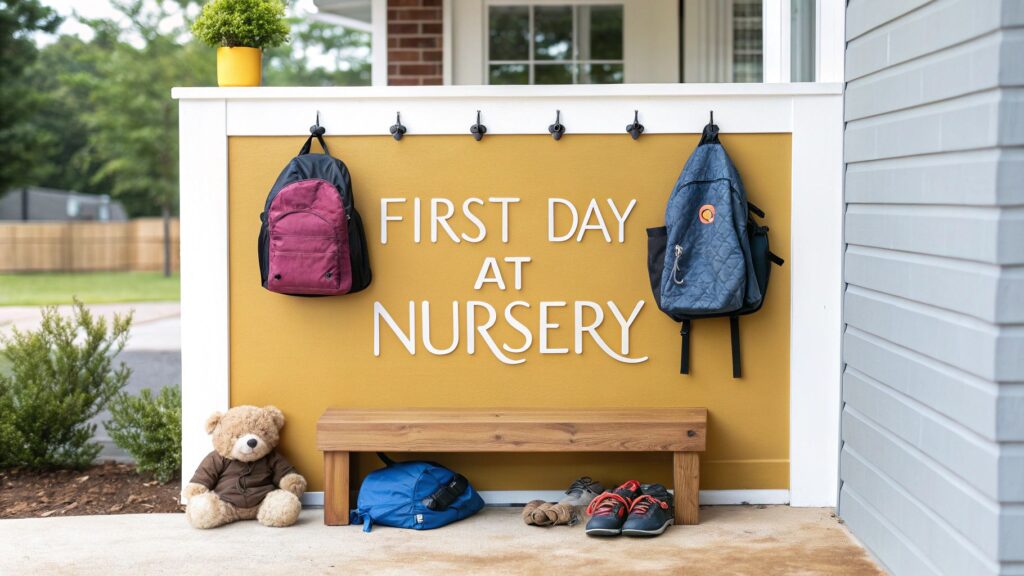
That first day of nursery is a huge milestone, and I remember it well. It’s bound to stir up a cocktail of emotions – for both of you. There's excitement, sure, but also a healthy dose of nerves and maybe a few wobbles. My biggest piece of advice? Your calm and confident attitude is their best anchor, helping you both navigate this new chapter with positivity and reassurance.
Navigating the Big Feelings of Starting Nursery

Let's be real: that first drop-off is tough. I still remember the lump in my throat. It's completely normal to feel your own wave of anxiety alongside the pride. This day isn't just a big step for your child; it's a massive transition for you, too. Well-meaning friends might say, "don't worry, they'll be fine," but the first step is actually admitting that you might not feel totally fine, and that's okay.
How you're feeling really sets the tone for your child. I found that when I managed to project calm and excitement, my little one felt much more secure. Think of it as creating a positive narrative where nursery is a fun, safe place for new adventures.
Understanding the Emotional Landscape
Whatever you're feeling, you're not alone. We've all been there. Families up and down the country go through this exact same transition every single year.
In fact, with over 11,700 day nurseries across the UK, this milestone is a shared experience for millions. This network supports a population of around 3.58 million children aged 0-4, which just goes to show how central the nursery journey is to early childhood.
This shared experience highlights a universal truth: every parent feels that little pang of separation.
Taking a moment to acknowledge your own emotions—whether it's sadness, worry, or even a bit of relief—is the first, most crucial step. It frees you up to be fully present and supportive for your child when they need you most.
Books can be a fantastic tool for helping children make sense of these new feelings. Reading preschool emotions books together gives them simple words for big feelings, making everything seem a little less overwhelming.
Ultimately, by managing your own emotions, you're modelling a healthy way to cope. This gives your child the security they need to embrace this exciting new stage.
How to Prepare in the Weeks Before
A brilliant first day at nursery rarely happens by chance. From my own experience, it’s the result of all the small, thoughtful things you do in the weeks leading up to the big event. This isn't about a last-minute dash, but about gently building a bridge for your child between the comfort of home and the excitement of nursery life. It means getting both the practical stuff and the emotional groundwork sorted.
Your main job is to frame nursery as a fun and exciting new adventure, not something daunting. Simple, positive chats are the best way to start. Talk about it with a smile in your voice: "Soon you'll get to play with all those brilliant toys at nursery!" or "You're going to make so many new friends, like Ella and Tom!"
Building Positive Familiarity
Familiarity is your secret weapon against first-day jitters. If the nursery feels like a place your child already knows and looks forward to, that initial anxiety melts away. It’s all about small, repeated actions that build up that sense of comfort over time.
Here are a few easy ways to make that happen:
- Do a few "practice runs." Walk or drive past the nursery building regularly. Each time you pass, point it out cheerfully: "Look, there's your new nursery! That's where you'll have story time and play in the garden."
- Read stories about starting school or nursery. It’s amazing how seeing characters go through the same thing can make it feel normal and much less scary for a little one.
- Become a photo detective. Look at pictures of the nursery together on their website or in a brochure. You can point out the friendly staff and the different play areas to build that all-important visual recognition.
Getting the Practicalities Sorted
Trust me, getting all the practical bits and bobs organised well in advance will save you a world of stress. One tip that was a game-changer for me was aligning our home nap schedule with the nursery's. About two weeks before my daughter's start date, I began shifting her lunchtime and nap by 15 minutes every few days. By the time her first day rolled around, that afternoon nap at nursery felt completely natural to her.
A perfectly packed bag is your best friend for a smooth, tear-free drop-off. The infographic below shows you exactly what a well-organised nursery kit looks like.
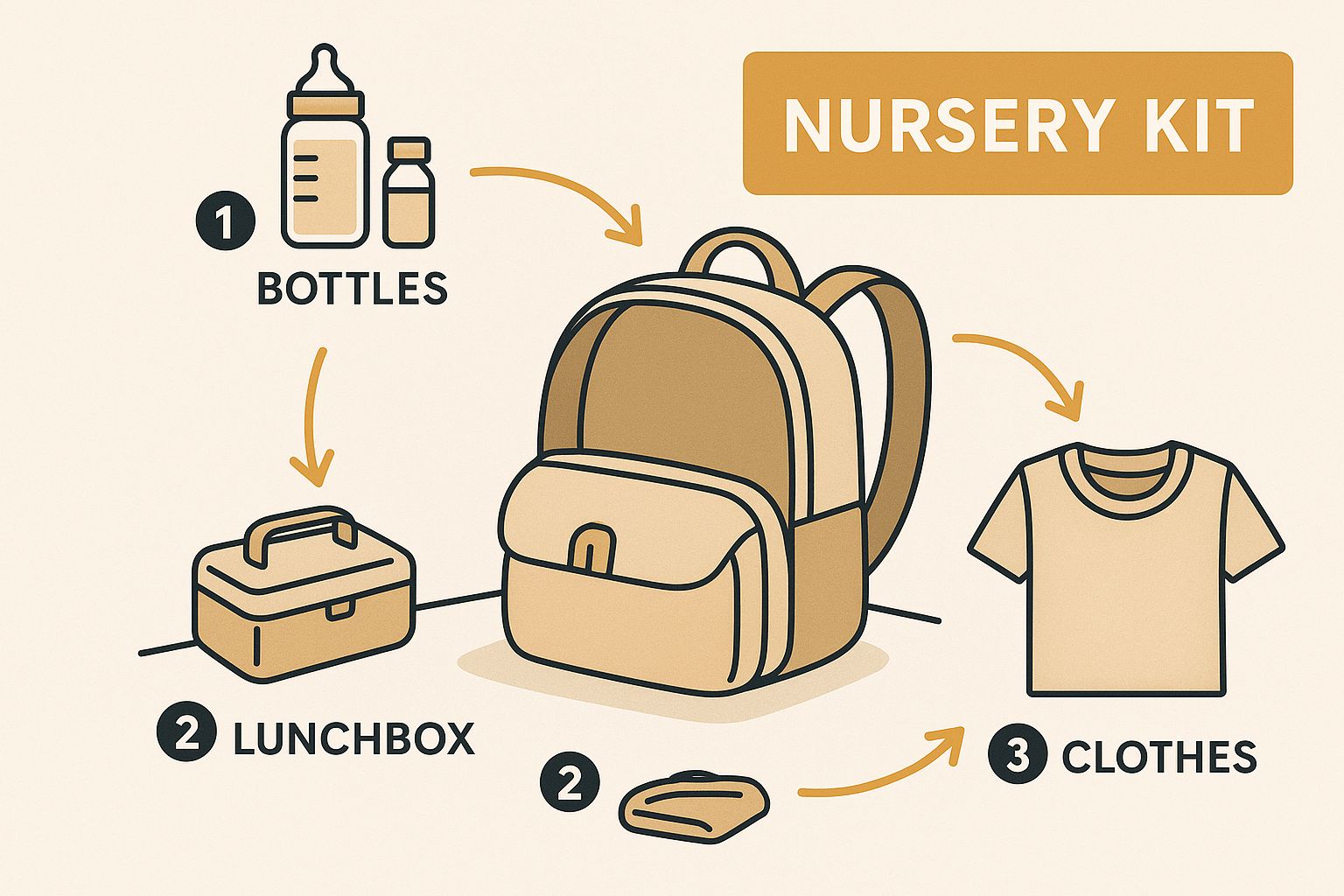
When you're trying to tick all the boxes, a checklist can be a lifesaver. It helps you stay organised and makes sure nothing gets forgotten in the final rush.
Your Pre-Nursery Checklist
| Task | Why It Helps | Pro Tip |
|---|---|---|
| Label Everything | Prevents lost jumpers, cups, and shoes. It’s a huge help for the nursery staff. | Use iron-on or sticker labels that can go through the wash. Label the inside of shoes, too! |
| Complete All Paperwork | Gets the admin out of the way so drop-off is focused on your child, not forms. | Keep a digital copy of important documents like emergency contacts and allergy information. |
| Buy Nursery Supplies | Having a dedicated nursery bag, water bottle, and spare clothes ready reduces morning stress. | Let your child help pick their own bag or lunchbox. It gives them a sense of ownership and excitement. |
| Practise Self-Help Skills | Encourages independence in things like putting on their coat or washing hands. | Turn it into a game! Who can put their shoes on the fastest? This makes learning fun. |
| Arrange Settling-In Sessions | Allows your child to experience nursery with you there, making it feel safe. | Use these sessions to chat with your child’s key worker and build a rapport. |
Having everything clearly labelled and ready to go not only helps the staff but also gives your child a sense of security. To help boost their independence before they start, trying some engaging fine motor skills activities at home is a fantastic idea.
Of course, choosing the right type of childcare is a huge decision in itself. If you're still weighing your options, our guide on the distinctions between a nanny vs a nursery can help you figure out what’s best for your family.
Building a Partnership with Nursery Staff
From day one, your child's key worker becomes one of the most important people in your support network. Think of them as your partner in this new adventure—someone you can rely on completely.
Building a strong, open relationship with them right from the start is genuinely the secret to a smooth transition. It’s what turns a wobbly drop-off into a confident goodbye, giving you peace of mind and helping your little one feel secure.
This partnership all comes down to communication. When you're in those first settling-in sessions, try to go beyond just the basics of nap schedules and what they'll be eating for lunch. This is your chance to get a real feel for how they’ll support your child emotionally.
Questions That Build Trust
Instead of asking generic questions about the daily routine, get specific. The answers will reveal so much about their approach to care and show that you’re focused on your child's emotional wellbeing.
You could try asking things like:
- "How do you usually comfort a child who’s missing their parent?"
- "What does a cuddle or a moment of reassurance look like here?"
- "If my child seems a bit quiet or withdrawn, how would you help them join in again?"
The small, personal details you share are just as vital. Tell staff about their favourite song, the name of their comfort teddy, or that silly face that always makes them giggle. These little insights are gold dust for a key worker trying to build a bond.
Knowing that a child loves The Gruffalo or absolutely needs their bunny, "Barnaby," for naptime allows the staff to provide comfort that feels familiar and truly personal. It makes all the difference in those first few weeks.
Of course, this is a two-way street. Consistent updates from the nursery are crucial for your confidence. In fact, research shows 92% of parents rated receiving updates about their child's day as a top factor for satisfaction. You can dive deeper into these findings in the latest Coram Childcare Survey.
A great partnership ensures you both feel connected and supported as your child begins this exciting new chapter.
Nailing the Drop-Off and Pick-Up
Let's be honest: the goodbye can be the toughest part of the day for everyone. A smooth drop-off really does set the tone, but it's a tricky balance between being warm and being quick. What you're aiming for is a predictable little routine that feels loving and secure, both on that first day and every day after.
Your own calm is the most powerful tool you have. Little ones are incredibly tuned in to our feelings, so if you're feeling confident and relaxed, they’ll pick up on that.
This is why a consistent goodbye ritual is your secret weapon. It doesn’t have to be anything elaborate. Think: one big hug, two quick kisses, and a cheerful, "I love you! Have so much fun, and I'll be back right after your snack!"
Make Goodbyes Quick and Loving
It’s so tempting to hang around, especially if there are a few tears. I’ve been there. But most child development experts agree it often just makes the upset last longer. The goal is to make the handover to their key worker feel warm, but final.
Your goodbye ritual becomes a comforting signal for your child. It communicates, "Everything is okay, you're safe here, and I will be back soon." This consistency is what builds trust and helps them settle into the rhythm of their day.
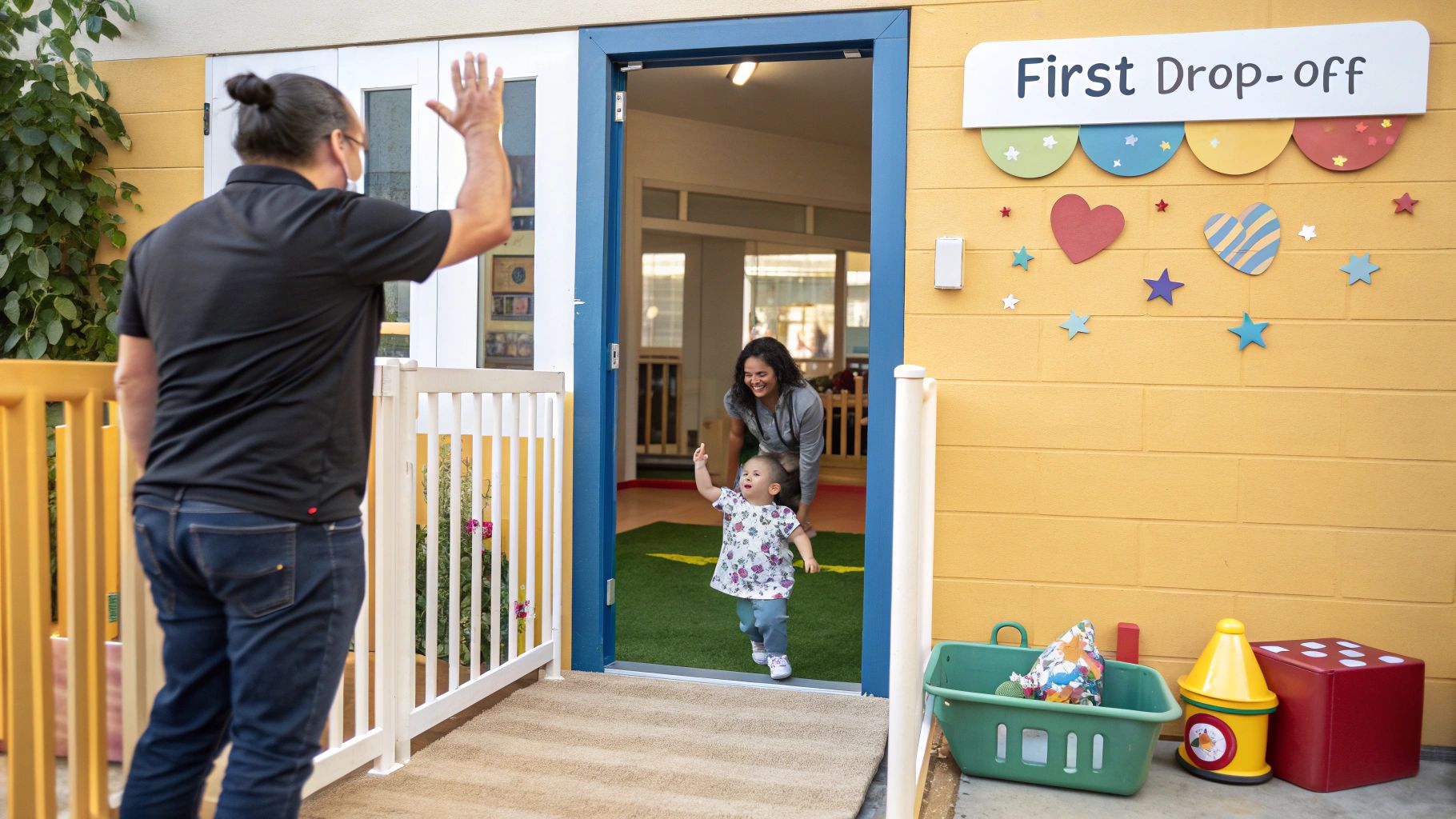
Once you’ve done your little ritual, it’s time to go. A quick, confident wave from the doorway is all that's needed. It shows your child that you trust the staff to take amazing care of them. This part can be especially tough for working parents; we have some great top tips for working mums that might help.
The All-Important Reunion
The pick-up is just as important as the drop-off. This is your chance to reconnect after a day filled with new things and big feelings. When you arrive, try to be fully present. Put your phone away, get down to their level, and give them a proper, welcoming hug.
Instead of the big, sometimes overwhelming question, "How was your day?", try asking something more specific. A question like, "What was the best story you heard today?" or "Did you get to play with the big blue blocks outside?" is much easier for a little one to answer.
This kind of warm, engaged reunion reinforces the message that nursery is a positive place you’re excited to hear all about.
Navigating the Bumps in the First Few Weeks
Let's be realistic: the adjustment period rarely wraps up neatly after the first day. The first few weeks are often a rollercoaster as your little one truly settles into their new world. It's completely normal to see a return of the clingy goodbyes, some wobbly sleep patterns, or even the first of those notorious nursery bugs making an unwelcome visit.
This phase is all about patience and managing your own expectations. Your child is processing a massive amount of new information—new faces, unfamiliar sounds, different toys, and a whole new routine. It’s no wonder they might be completely wiped out and a bit emotional by the time you pick them up. A calm, predictable evening routine can be your secret weapon here, helping them to decompress and reconnect with you.
Knowing When to Wait It Out and When to Chat with Staff
Most of these early hurdles, like a few tears at drop-off or the classic after-nursery meltdown, are just temporary. They're signs that your child is working hard to adapt. That said, your parental gut feeling is always your best guide.
Here are a few common scenarios you might run into:
- The Second-Week Tears: It's a classic! Your child might have been perfectly happy for the first few days, but suddenly becomes tearful at drop-off. This often happens when the initial novelty wears off and the reality of the new routine sinks in. The best approach? Stick to your quick, confident goodbye and pile on the cuddles when you get home.
- Sleep Goes Sideways: A new nap schedule or sheer overstimulation can throw nighttime sleep out of whack for a bit. Try leaning into a super-relaxing bedtime routine—think warm bath, quiet story, and extra snuggle time—to help them wind down.
- The 5 PM Meltdown: Toddlers are masters at "holding it all together" at nursery, only to let all their big feelings out in their safest place—with you. Try to meet these moments with empathy. Acknowledge their day ("You had such a busy, long day, didn't you?") and offer a simple, calming activity to do together.
The trick is to see these behaviours not as a step backwards, but as a normal part of the settling-in journey. Give it time, offer endless reassurance, and keep the conversation going with your key worker. Trust me, they've seen it all before.
Thankfully, you're in good hands. The UK childcare sector is incredibly well-regulated. Of the 60,400 childcare providers registered with Ofsted in England, a staggering 98% are rated as good or outstanding. This means your nursery team is well-equipped and experienced in helping families navigate these exact challenges. For more reassurance, you can read about the sustained quality in UK childcare.
Your Top Nursery Questions Answered
It's completely normal for your mind to be racing with questions as your child's first day at nursery gets closer. Every parent has been there, worrying about everything from tearful goodbyes to whether their little one will nap. We've tackled some of the most common queries to help put your mind at ease.
What If My Child Cries Every Day at Drop-Off?
First, take a deep breath. Tears at drop-off are incredibly common and a totally normal part of the settling-in process. This phase often lasts a week or two as your child adjusts to the new routine and people.
The best strategy is to create a quick, loving, and confident goodbye. A long, drawn-out farewell can actually make it harder for them. If the tears continue for more than a couple of weeks, have a chat with your child's key worker. They’ve seen it all before and can work with you on a plan to help your little one feel more secure.
Should I Let Them Take a Comfort Toy?
Absolutely! A familiar teddy, a special blanket, or any beloved toy from home can be a huge source of comfort in a new, busy environment. It’s a little piece of their world that can make a big difference.
Just make sure it’s clearly labelled with their name. It's also a good idea to quickly check the nursery’s policy on personal items, just in case.
As you navigate the world of nursery, you might start thinking about other childcare arrangements for the future. It can be helpful to explore all the options, and understanding the benefits of hiring a nanny might give you a clearer picture of what will work best for your family as your child grows.
Remember, this is a partnership between you and the nursery staff. No question is ever too small to ask.
Whether you need full-time support or specialised care, Superstar Nannies delivers rigorously vetted professionals for elite households worldwide. Find peace of mind with our bespoke placements at https://superstarnannies.com.