

If you’re asking yourself, “how can I become a nanny?”, the first thing I want you to know is that this career has grown far beyond what most people think of as babysitting. From my years in this industry, I can tell you that being a professional nanny today is a career that requires a special mix of emotional intelligence, professional skill, and a genuine passion for child development. It’s a job built on trust, respect, and a profound personal connection with a family.
What It Really Means to Be a Nanny Today

Let’s clear up any old-fashioned ideas. A modern nanny is a respected professional, a mentor, and a key partner for parents in raising their children. It’s a career path that comes with huge responsibility, but believe me, the rewards are just as significant.
This isn’t just about making sure children are safe and have their meals. It’s about actively contributing to their crucial early years. A typical day could see you helping a toddler with fine motor skills through messy play in the morning, then shifting gears in the afternoon to help a school-aged child with their homework and navigate big emotions.
The heart of modern nannying is understanding you’re not just a carer—you’re a foundational figure in a child’s life. Families aren’t just looking for a helping hand; they are welcoming an influential role model into their home.
This makes the role incredibly fulfilling, but also demanding. It calls for a unique set of personal qualities that go well beyond simply “loving children”.
The Qualities I See Families Truly Value
While we’ll get to formal qualifications later, what families and top agencies like mine really look for are the personal traits that signal a truly exceptional carer. These are the things that build strong, positive relationships.
So, what are we really looking for?
- Deep-seated Patience: The ability to stay calm, kind, and steady through toddler tantrums, a schoolchild’s frustrations, and the endless “why?” questions. I’ve seen it time and again – patience is everything.
- Boundless Creativity: You need to be able to think on your feet, turning a boring rainy day into a magical indoor adventure or a simple meal into a fun learning moment.
- Emotional Intelligence: This is about reading the room. It’s recognising and responding to the subtle emotional cues of both children and their parents, helping to create a calm and supportive home.
- Unwavering Reliability: Simply put, you have to be the person a family can always count on. Your consistency provides the security children need to thrive.
Ultimately, deciding to become a nanny means taking an honest look at whether your passion for nurturing children truly aligns with the professional demands of this vital career. It’s a path for people who find genuine joy in making a direct, positive impact on a child’s happiness and growth.
Getting the Right Nanny Qualifications and Skills
If you’re wondering “how can I become a nanny?”, it’s important to realise that a genuine love for children is just the starting point. To build a real career, you need a professional foundation. This is what separates a casual babysitter from a highly sought-after nanny, and it all begins with the qualifications and skills UK families expect.
Think of your qualifications as your professional toolkit. Some tools are absolutely essential, while others show a higher level of expertise that can open doors to more rewarding roles.
The Non-Negotiable Nanny Essentials
Before a family even looks at your experience, they need to know their child will be safe. There are two absolute must-haves for any professional nanny in the UK. In my book, they’re the bedrock of trust.
- An Enhanced DBS Check: This is the most thorough criminal record check available and a standard requirement for anyone working with children. A clean check is non-negotiable.
- A Paediatric First Aid Certificate: Knowing how to respond calmly and correctly in an emergency—from a minor scrape to something more serious—is a vital skill. Families need that peace of mind.
This infographic really drives home just how critical these safety certifications are.
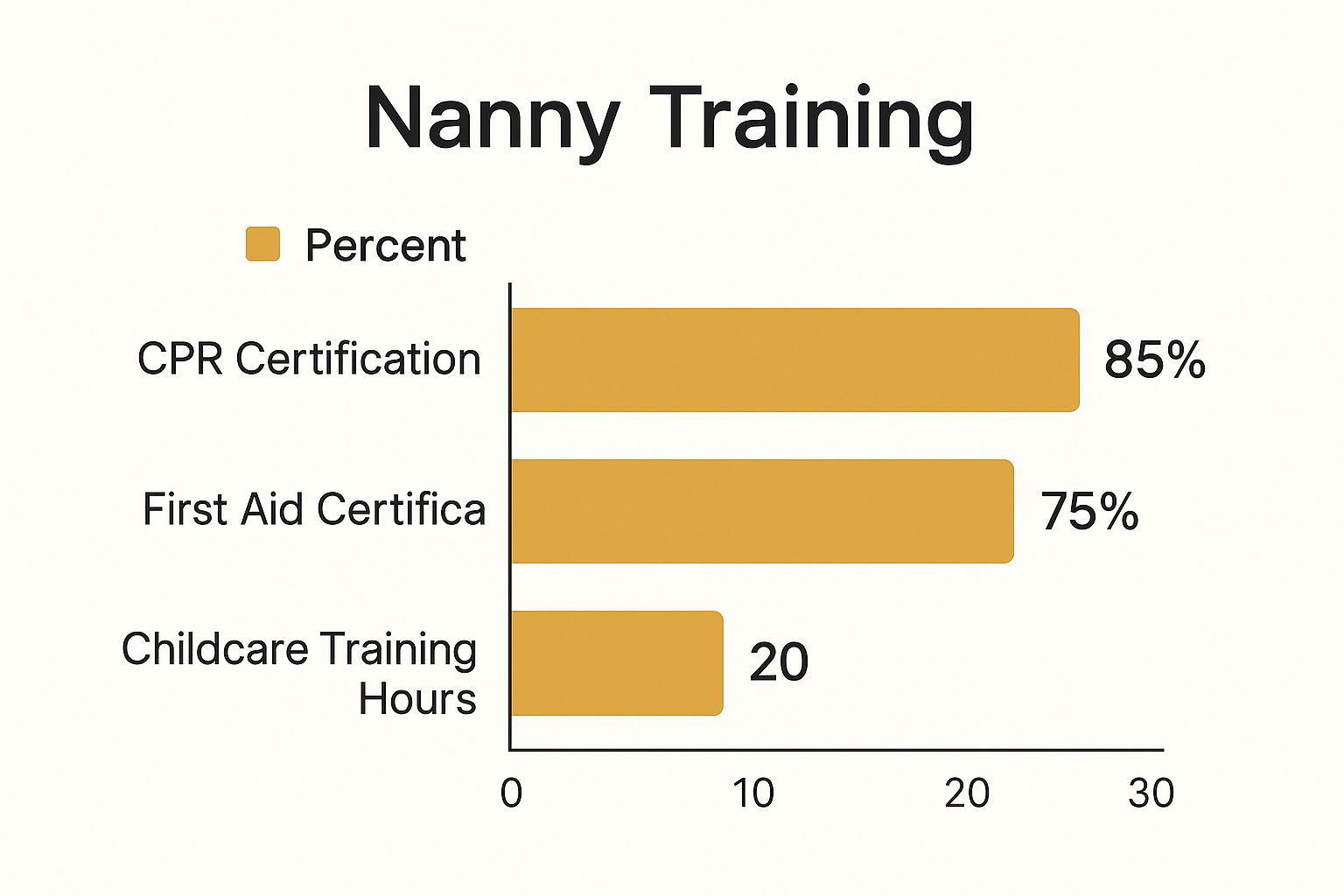
As you can see, holding first aid and CPR certifications isn’t just an advantage; it’s the professional standard.
Advancing Your Career with Formal Qualifications
Once you have the basics covered, formal childcare qualifications show a serious commitment to your profession. While they aren’t always a strict legal requirement for nannies, qualifications like a Cache Level 3 Diploma in Childcare and Education are highly respected.
They prove you’ve studied child development, safeguarding, and educational play in depth. This kind of qualification often leads to better job prospects and a higher salary, signalling to families that your practical skills are backed by solid theoretical knowledge.
It’s also worth noting that the childcare sector is constantly evolving. As professional standards rise, the job market can become more competitive. For instance, official data showed a slight drop in the number of home childcarers between March 2023 and March 2024. This trend can tighten the job market and push up salary expectations for the most qualified candidates. You can explore more on how this impacts nanny salaries and job opportunities at NannyTax.co.uk.
Beyond the Certificates: The Soft Skills That Matter Most
Paper qualifications tell only part of the story. The skills that make a nanny truly exceptional are the ones you bring to life every day through your actions and interactions. These are the soft skills that build lasting, positive relationships with children and their parents.
An outstanding nanny doesn’t just manage a child’s day; they enrich it. They are a calm presence, a creative playmate, and a supportive guide all rolled into one. I’ve seen this firsthand countless times.
Mastering positive communication is key. This means really listening to parents to understand their parenting style and giving clear, respectful updates on their child’s day. With children, it means getting down on their level, validating their feelings, and using age-appropriate language to guide them.
Developing a bank of engaging, educational activities is another game-changer. It’s about being creative—turning a simple walk in the park into a nature scavenger hunt or using building blocks to introduce early maths concepts. To help you build this side of your toolkit, check out our guide on the top 10 skills every superstar nanny must have in 2025.
When you combine these essential soft skills with your formal qualifications, you become the kind of professional every family is looking for.
How to Gain Hands-On Childcare Experience
Qualifications look great on paper, but I can tell you that nothing beats real-world experience. This is where you truly get a feel for the unique rhythm of childcare and build the kind of confidence that families can spot a mile off.
If you’re wondering how to become a nanny with no formal experience, the simple answer is to start getting that experience now. Every hour you spend genuinely engaging with children moves you closer to your goal. This practical application is what makes a CV come alive, transforming you from someone who has studied childcare to someone who has lived it.
Start Building Your Experience Portfolio
You don’t need a paid, full-time nanny job to begin. Opportunities to build your skills are everywhere, and each one is a valuable stepping stone. The trick is to treat every single role with the same level of professionalism, no matter how informal it might seem.
Here are a few practical places to start:
- Elevate your babysitting: Offer to help friends, family, or neighbours. But don’t just supervise – go a step further. Plan a simple craft, organise a game in the garden, or help with homework. Afterwards, don’t be shy about asking for a written reference to start building your professional file.
- Volunteer in your community: Get in touch with local nurseries, primary schools, or even after-school clubs. They are often grateful for an extra pair of hands. This gives you priceless experience in a structured environment where you can observe and learn from seasoned professionals.
- Shadow an experienced nanny: Do you know a professional nanny? Offer to work as their ‘mother’s help’ or assistant, even just for a few hours a week. It’s an incredible way to get direct mentorship and see how a pro handles the day-to-day realities of the job.
The key is to treat every experience, whether it’s paid or voluntary, as a genuine professional opportunity. Keep a log of your responsibilities, the ages of the children, and any specific skills you learned or put into practice. This is your story, so start writing it now.
Frame Your Experience for Success
Gaining the experience is only half the battle; how you present it is what really counts. You need to show a potential employer that your background has given you practical, transferable skills.
For anyone just starting out, learning to frame informal experience is a game-changer. It’s well worth reading up on how to write a resume with no formal experience to ensure your application shines.
The UK nanny market is actually very accommodating for those building their careers. The National Nanny Association found that 63% of nanny jobs are part-time, with another 8% being casual or ‘bank’ work. This is fantastic news because it means you can ease into the profession, taking on smaller roles to build your CV before looking for a full-time position.
This flexibility provides a clear and manageable path into the industry. As you gather more experience, you can explore different kinds of roles to find what truly suits you. When you feel you’re ready to take that next step, browse through high-quality professional nanny job opportunities and put your hard-earned experience to work.
Creating a Nanny CV That Gets You Hired
Think of your CV as more than just a list of past jobs. For a family looking for the right nanny, it’s the very first glimpse they get of you—not just as a professional, but as a person. When you’re aiming for those top-tier nanny roles, a generic, cookie-cutter CV just won’t cut it.
Families aren’t just filling a position; they’re inviting someone into the very heart of their home. Your CV needs to build trust right from the first sentence and tell a story of responsibility, passion, and genuine care. This is your chance to show them why you’re the one they can trust to shape their child’s world.
Crafting a Powerful Personal Statement
The very top of your CV is prime real estate. Ditch the old-fashioned, generic “Objective” section. Instead, you need a warm, engaging personal statement or professional summary that perfectly captures your childcare philosophy. This is where you let your personality shine through.
So, what does that actually look like? Instead of something bland like, “Seeking a nanny position to utilise my skills,” try leading with your heart:
“A compassionate and creative nanny with over four years of experience fostering nurturing environments for children aged 2 to 7. I believe in a play-based learning approach that encourages curiosity and kindness, and I am dedicated to becoming a supportive and reliable partner for your family.”
See the difference? This version immediately shows a family how you care for children, not just that you want a job. It sets a warm, professional tone and makes them want to keep reading.
Structuring Your Experience for Impact
When you get to your work history, it’s all about showing your impact, not just listing your duties. Every family knows a nanny’s basic responsibilities. What they really want to see is the unique value you brought to your previous roles. To do this well, it helps to understand the essential components of a strong resume so that every part of your CV is working hard for you.
Here’s how to make your experience stand out:
- Be Specific with Ages: Always, always mention the ages of the children you looked after. Caring for a newborn requires a completely different skill set than managing a ten-year-old’s schedule.
- Use Action Verbs: Start your bullet points with strong, dynamic verbs. Words like “organised,” “managed,” “developed,” “supported,” and “nurtured” paint a much clearer picture of your abilities.
- Show, Don’t Just Tell: Don’t just say you “Planned activities.” Instead, describe it: “Developed weekly themed activities, including sensory play and outdoor nature walks, to support early years development.”
To help pull it all together, here’s a quick guide to what should go into the key sections of your CV.
Essential Information for Your Nanny CV
| CV Section | What to Include | Personal Touch Tip |
|---|---|---|
| Contact Details | Your name, phone number, professional email, and general location (e.g., “South London”). | Create a simple, professional email address (e.g., firstname.lastname@email.com) if you don’t already have one. |
| Personal Statement | A 3-4 sentence summary of your experience, key skills, and childcare philosophy. | Mention a specific quality you’re proud of, like your patience, creativity, or ability to stay calm under pressure. |
| Work Experience | List roles in reverse-chronological order. Include family name (or “Private Family”), dates, and location. Use bullet points for achievements. | For each role, include a bullet point about how you supported the family as a whole, not just the children. |
| Qualifications | List any formal qualifications, such as a degree in Early Childhood Education or a CACHE Level 3 Diploma. | If you wrote a dissertation on a relevant topic, mention it to show your depth of knowledge. |
| Certifications | This is crucial. List your Paediatric First Aid, DBS check (with date), and any other relevant certificates. | Note if your DBS is on the Update Service, as this is a huge plus for families. |
| References | State “Excellent references available upon request.” | Have your reference letters ready to go, and give your referees a heads-up that they might be contacted. |
Ultimately, your goal is to move beyond a simple list of tasks and showcase the real value you bring. Your CV should answer the big question on every parent’s mind: how will you enrich our child’s life? By focusing on these personal and professional details, you create an application that doesn’t just get noticed—it gets you hired.
Navigating Your Nanny Salary and Employment Contract
Let’s get down to business. Being a professional nanny isn’t just a job; it’s a career. That means understanding your financial worth and your legal rights is absolutely vital for your security and long-term success.
This is often the part where new nannies feel a bit out of their depth, but it’s really just a matter of knowing what to expect and what to ask for. The most important conversation you’ll have with a family—right after the one about their children—is about your salary. It needs to be handled with professional clarity right from the start.
The Golden Rule: Always Agree on Gross Pay
If you remember one thing from this section, make it this: the difference between gross and net pay. Your gross salary is the full amount before any tax or National Insurance is taken out. Your net pay is what actually lands in your bank account.
As a professional, you must always agree on a gross salary. This is the industry standard for a reason—it protects you. It makes it crystal clear that the family, as your employer, is responsible for sorting out all the tax and NI contributions. This saves you from a nasty surprise from HMRC down the line.
Agreeing to a net salary is a recipe for complications. Tax codes change, and if you have another source of income, you could easily end up underpaying your tax and being left to foot the bill. Always, always insist on a clear, written agreement stating your gross annual or hourly wage.
Know Your Worth: UK Nanny Salary Benchmarks
You can’t negotiate with confidence if you don’t know the going rate. Nanny salaries can vary quite a bit across the country, depending on your location, your level of experience, and exactly what the job involves.
For the 2024/25 tax year, the average gross salary for a live-out nanny in Greater London is around £46,436 per year, which works out to £17.86 per hour. Step outside of London, and the average is closer to £15.77 per hour. These figures give you a solid baseline for what you should be earning. For a more tailored look, you can get help with calculating your nanny salary rate based on your specific details.
It’s also worth noting that nanny wages have jumped by around 50% over the past five years. And families are often willing to pay a premium of about 20% for nannies with sought-after skills, like experience with special educational needs (SEN) or the ability to offer tutoring. You can find more insights on this trend from the rising costs of nanny care at MoneyWeek.com.
What Must Be in Your Employment Contract
Think of your employment contract as your safety net. It’s a legally binding document that lays out all the expectations and responsibilities for both you and the family. Never, ever start a new role without one signed and in your hands.
A proper contract should clearly spell out:
- Working Hours: The specific start and finish times, plus which days of the week you’re expected to work.
- Your Duties: A detailed list of everything you’re responsible for, from childcare tasks to any light housekeeping.
- Salary: The agreed gross hourly or annual wage and when you’ll be paid.
- Holiday Entitlement: How many paid holiday days you get per year.
- Sick Pay: The details of the statutory sick pay policy.
- Notice Period: How much notice you or the family need to give to end the employment.
Taking the time to get these details right before you start ensures your new job begins on a fair, clear, and legally sound footing.
Answering Your Final Questions About Becoming a Nanny
As you get closer to starting your career, a few practical questions are bound to come up. It’s completely normal! Getting these sorted out now will help you feel confident and ready to land that first amazing role.
Let’s tackle some of the most common queries I hear from aspiring nannies.
Do I Absolutely Need a Formal Childcare Qualification?
This is probably the question I get asked most often. The short answer is no—a formal qualification, like a Level 3 Diploma, isn’t a legal must-have to work as a nanny in the UK.
However, the reality is that they are highly valued by families and top agencies. Think of it as a professional seal of approval. It shows you’re serious about your career and have a solid foundation in child development, which gives parents huge peace of mind.
For many families hiring directly, a fantastic track record with verifiable experience, a current paediatric first aid certificate, and an enhanced DBS check can be more than enough to get you in the door.
My advice? See qualifications as a key that unlocks better doors. You can certainly find work without them, but having a respected qualification on your CV will almost always open you up to more prestigious roles and better pay, particularly if you’re aiming to work with elite agencies.
What Are the Biggest Differences Between Live-In and Live-Out Roles?
It really comes down to where you rest your head at night. A live-in nanny lives in the family’s home, and your accommodation—and often bills—are part of your compensation package. This arrangement can foster a really close bond with the family, but it often requires a bit more flexibility with your hours.
On the flip side, a live-out nanny travels to the family’s home for their shift and goes back to their own place afterwards. This creates a much cleaner line between your work life and your personal life, which many nannies find essential for their own wellbeing.
Here’s a simple breakdown:
| Aspect | Live-In Nanny | Live-Out Nanny |
|---|---|---|
| Living | Resides in the family’s home | Commutes to work daily |
| Boundaries | Lines between work and personal life can be blurred | Clear separation of work and home life |
| Salary | Traditionally lower net pay, but this is changing; accommodation is part of the package | Typically a higher gross salary as accommodation is not included |
| Flexibility | Often required to be more flexible with hours, including evenings or weekends | Usually has more structured, predictable working hours |
Ultimately, there’s no right or wrong answer here. It’s a very personal decision that depends entirely on your lifestyle and what you prioritise—the convenience and deep integration of a live-in role, or the independence and structure of living out.
What Is the Best Way to Find My First Nanny Job?
Landing that first role is a huge and exciting step! Thankfully, there are a few proven paths you can take.
- Reputable Nanny Agencies: This is often the safest and most efficient way forward. A good agency does the heavy lifting, vetting both families and nannies to ensure a good match. They also provide incredible support, helping with everything from polishing your CV to navigating contract negotiations.
- Professional Online Platforms: Websites like Nannyjob.co.uk or Childcare.co.uk are fantastic resources for connecting directly with families. You can build a detailed profile that really showcases your personality and skills.
- Networking: Don’t ever underestimate the power of word-of-mouth! Tell friends, family, and any former colleagues that you’re looking for a nanny position. You’d be surprised how many brilliant jobs come from personal recommendations.
No matter which route you take, the key is to be ready to spring into action. Have your professional CV, glowing references, and your essential documents—your DBS check and first aid certificate—scanned and ready to send at a moment’s notice.
At Superstar Nannies, we specialise in connecting exceptional childcare professionals with elite families across the UK and worldwide. If you’re ready to take the next step in your career, explore our curated opportunities and find your perfect placement. Learn more at Superstar Nannies.