


Hunting for ‘nanny jobs near me’ can feel a bit like shouting into the wind, but the truth is, your ideal family is probably just around the corner. Think of this guide as your personal playbook, put together from the real-world experiences of nannies who have been exactly where you are now. We’re going to skip the fluff and get straight to what actually works.
Your Realistic Guide to Finding Local Nanny Roles

Diving into the search for local nanny jobs can be a real headache. You’re faced with endless online listings and frustratingly vague job descriptions, and it’s easy to feel burnt out before you’ve even started. I’ve been there—spending hours scrolling through roles that were a complete mismatch for my experience and what I was looking for.
But this guide is different. It’s packed with insights from career nannies, including some of my own hard-won lessons. Forget looking for a needle in a haystack; we’re going to give you a magnet.
Focusing on What Matters
The goal here isn’t just to land any job. It’s about finding the right job. You’re looking for a role where you feel genuinely respected, valued, and can become a real part of a family’s life. To get there, we need to stop worrying about the number of applications and start focusing on the quality of the opportunities.
A successful job search is about more than a good CV. It’s about knowing your worth, understanding the market, and connecting with families on a genuine level.
Over the next few sections, we’ll walk through the practical strategies you need, including:
- How to build a profile that stands out to the best families.
- Where experienced nannies actually look to find great local jobs.
- Figuring out what you should be earning so you can negotiate with confidence.
Let’s get you equipped with the insider know-how to find those rewarding nanny jobs near me and land a role you’ll genuinely love.
Building a Portfolio That Tells Your Story

When you’re looking for nanny jobs near me, it’s easy to think of your portfolio as just a CV. But it’s so much more than that. I always tell nannies to think of it as the very first real introduction a family gets to you, your personality, and how you approach childcare. This is your chance to tell a story that a simple list of past jobs just can’t.
A great portfolio makes your experience tangible. Instead of just saying you worked for a family for two years, bring it to life with a specific achievement. Maybe you helped a toddler hit a key developmental milestone, or you supported a school-aged child in learning a new language. It’s these little details that show the real impact you made.
Showcasing Your Skills and Personality
Crafting this narrative helps families connect with you as a person, not just another candidate on a list. A warm, friendly video introduction can be a game-changer—even a quick, 60-second clip filmed on your phone. I’ve seen fantastic nannies land interviews based on their video alone because it let their passion shine through before they even set foot in the door.
Your portfolio should do more than just list qualifications. It needs to tell the story of why you are a great nanny, highlighting your unique ability to connect with and nurture children.
When you gather references, ask for something more personal than a confirmation of your employment dates. Ask previous families if they’d be willing to share a short anecdote. A parent describing how you handled a tricky situation with patience and creativity is worth so much more than a generic recommendation.
Compiling Your Essential Documents
Of course, the practical side of things is non-negotiable. Having a well-organised portfolio with clear, up-to-date copies of your core documents builds immediate trust and signals your professionalism.
Make sure you have these ready to go:
- An enhanced DBS check (Disclosure and Barring Service)
- A valid paediatric first-aid certification
- Any other relevant qualifications you hold, like a degree in early years education
Having these documents organised and ready to share proves you’re a serious and prepared professional. Ultimately, it’s this blend of personal storytelling and professional readiness that will make your portfolio truly stand out from the crowd.
Where Top Nannies Actually Find Their Jobs
Knowing where to look can be the difference between finding just another job and landing the right job. When you’re searching for nanny jobs near me, it’s tempting to hit the big, generic job boards. But in my experience, the best local opportunities rarely show up there. The most successful nannies I know put their energy into more specialised and community-focused places.
It’s all about quality over quantity. These channels connect you directly with serious, reputable families who are looking for a professional just like you.
This chart breaks down where many nannies find their best local roles.
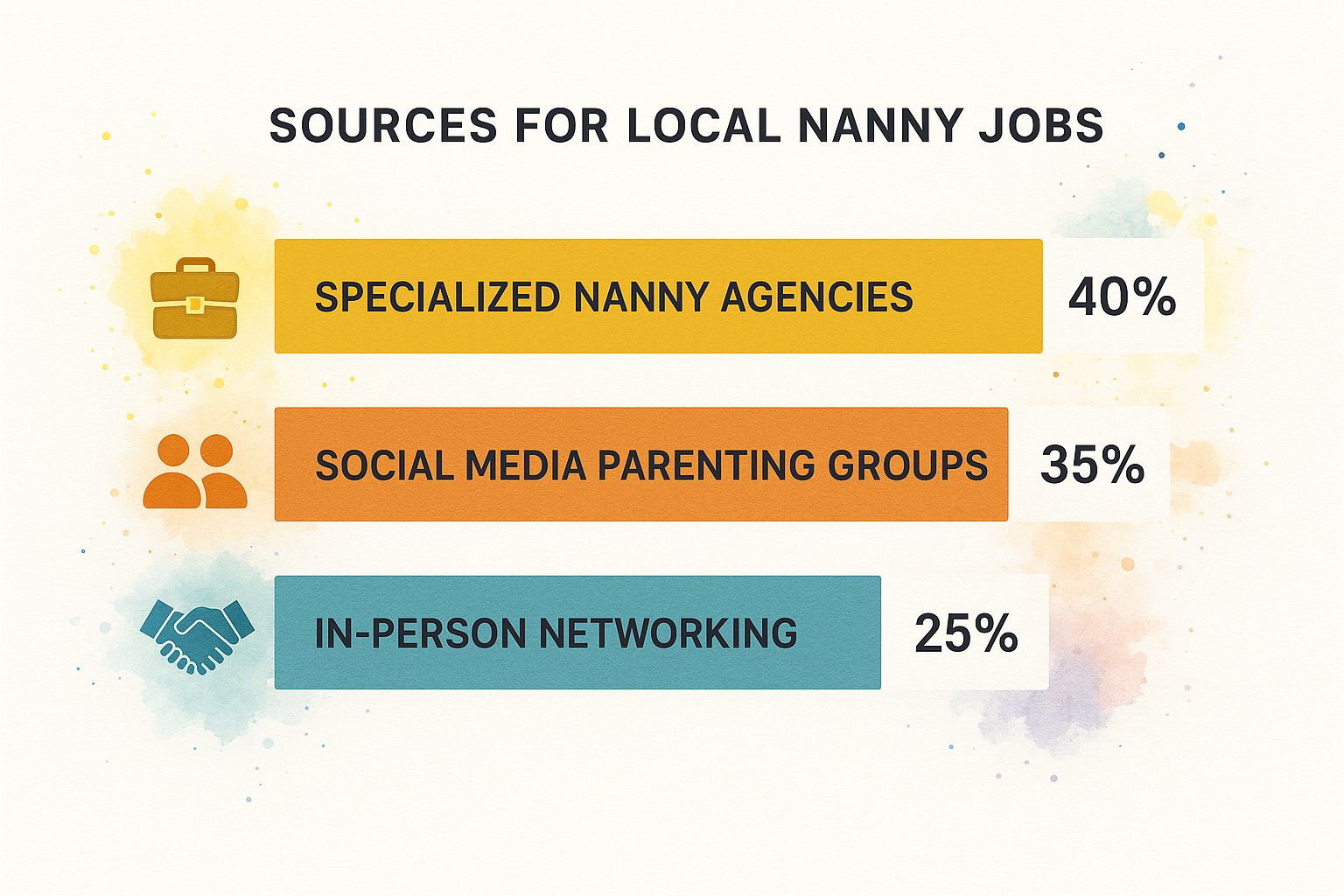
As you can see, a mix of professional agencies and good old-fashioned community networking really does bring the best results.
Dedicated Nanny Agencies
Going through a specialised agency is a fantastic move because they do a lot of the initial legwork for you. They build solid relationships with high-calibre families and focus on matching you with roles that are a genuine fit for your skills and personality. It adds a layer of security and professionalism, making sure contracts and salary expectations are crystal clear from the get-go.
A huge plus is that many agencies have exclusive access to jobs that are never advertised publicly. You can see what’s out there by checking the current Job Opportunities available through a reputable placement service.
Local Social Media and Networking
Never, ever underestimate the power of word-of-mouth. Local parenting groups on Facebook can be absolute goldmines for finding nearby nanny positions. Families often post in these groups first because they’re looking for recommendations from within their own community. I’ve seen some incredible job offers come from a simple chat with another nanny at the park.
Building a name for yourself within your local childcare community can open doors that online applications never will. Trust and personal connection are everything in this industry.
It’s also worth looking beyond the usual job boards. Platforms like LinkedIn are becoming more important for childcare professionals. For more on this, check out these tips on optimizing your LinkedIn profile to attract recruiters – it can make a massive difference. Making genuine connections, both online and in your neighbourhood, helps you become a known and trusted name.
Know Your Worth: A Guide to Nanny Pay Rates
Right, let’s get straight to the point: money. Before you even start searching for nanny jobs near me, getting a firm grip on what you should be earning is one of the most powerful things you can do.
Nanny pay across the UK isn’t a one-size-fits-all figure. It shifts dramatically depending on where you are, your level of experience, and exactly what the family needs. Walking into that salary conversation armed with real-world knowledge is how you ensure you’re paid fairly for the vital work you do.
Gross vs. Net Pay: Don’t Get Caught Out
This is a classic stumbling block, especially if you’re new to the profession. Understanding the difference between gross and net pay is non-negotiable.
- Gross Pay: This is your full salary before anything like tax or National Insurance is deducted. It’s the big number, and it’s the one that absolutely must be on your contract.
- Net Pay: This is what you actually see in your bank account each month. It’s your “take-home” pay after all the deductions are made.
Expert Tip: Always, always negotiate your salary in gross terms. It’s the industry standard for a reason. It provides complete clarity and protects you from any future changes to tax codes or your personal circumstances.
If you want to dive deeper into the numbers, you can learn more about calculating your nanny salary rate.
How Your Postcode Affects Your Paycheque
It’s a simple fact of the nanny world: where you work plays a huge role in what you earn. The cost of living and demand for experienced nannies in central London means the pay scale is significantly different from that in Manchester or Bristol.
Knowing the going rate for your specific town or city gives you a solid, realistic starting point for negotiations. Don’t just look at national averages; focus on what’s fair for your local market.
In London, for example, a full-time, live-out nanny can typically expect to earn between £18–£25 gross per hour. That translates to an annual salary somewhere in the region of £40,000–£60,000.
Step outside the capital, and those figures naturally adjust. You might be looking at around £16–£18 gross per hour, putting the yearly salary between £30,000–£40,000. While live-in nannies have a lower gross weekly wage because their accommodation is included, it’s worth remembering that their disposable income can often be much higher.
Having these figures in your back pocket means you can set your expectations with confidence and negotiate the salary you truly deserve.
Navigating the Interview and Trial Day
This is it – the stage where you find out if there’s a real connection. When you’re searching for nanny jobs near me, it’s easy to forget that the interview is a two-way street. You’re not just there to impress them; you’re also figuring out if they’re the right fit for you.
Don’t be afraid to go beyond the basics like hours and pay. This is your chance to really understand their parenting philosophy, how they approach discipline, and what the day-to-day rhythm of their household feels like. These are the details that truly matter. For a bit of inspiration, have a look at this list of key nanny interview questions to ask families to get you started.
Making the Most of the Trial Day
If the interview goes well, the next step is often a trial day. Think of this less as a test and more as a real-world preview. It’s your opportunity to see how the family’s routine actually plays out and whether you can genuinely see yourself as part of it.
My best advice? Be a sponge. Observe how the parents and children interact. Is the home calm and structured, or is it more of a lively, free-flowing environment?
A trial day is less about performing perfectly and more about building genuine rapport. It’s your chance to confirm that the connection you felt in the interview translates into the reality of daily life with the family.
Your goal is to engage with the children just as you normally would, showing your natural warmth and competence without putting on a performance.
While you’re there, keep an eye on a few specific things:
- The Children’s Routine: How set in stone is their schedule for meals, naps, and playtime?
- Communication Styles: Pay attention to how everyone in the family speaks to one another.
- Your Gut Feeling: This is the most important one. How do you feel in their space? Do you feel comfortable, respected, and at ease?
A great trial day isn’t just about proving you can do the job; it’s about building a foundation of trust. It reassures the family that you’re the right choice and gives you the confidence that you’ve found an environment where you can truly thrive.
Getting to Grips with Your Nanny Contract and Rights
Getting that job offer is a brilliant feeling, but it’s the contract that truly solidifies a professional relationship. When you’ve found the perfect nanny jobs near me, getting the paperwork right from the start is the best way to protect everyone involved and set the stage for a great working partnership.
A good contract isn’t just a formality; it’s a tool to prevent misunderstandings down the line. It lays out clear expectations for both you and the family, leaving no grey areas about your role. Before you even think about signing, make sure you understand how to effectively read contracts and feel completely comfortable asking questions.
The Absolute Must-Haves in Your Contract
Think of your contract as the blueprint for your employment. It needs to be clear, detailed, and cover all the key bases of your job.
Look for these non-negotiable points:
- Your exact duties: What are you responsible for? Having this in writing prevents your role from expanding unexpectedly.
- Working hours: Clear start and finish times, plus details on breaks.
- Your gross salary: How much you’ll earn before tax, and how often you’ll be paid (e.g., weekly, monthly).
- Overtime pay: The specific rate for any hours worked beyond your standard schedule.
- Time off: Your entitlement for holidays and sick leave, which must align with UK law.
A solid contract is the foundation of a successful placement. It’s not about a lack of trust—it’s about establishing mutual respect and making sure everyone agrees on the details from the very beginning.
Understanding Your Pay and Legal Rights
It’s your employer’s legal duty to manage your payroll properly. This means they are responsible for your tax, National Insurance, and any pension contributions. You should always receive a payslip each time you are paid.
It’s also crucial to know the legal minimum wage. For instance, from 1st April 2025, the National Living Wage for nannies aged 21 and over will increase from £11.44 to £12.21 gross per hour. Families must comply with this. Underpaying a nanny can result in serious legal trouble and financial penalties for them. You can read up on the upcoming 2025 minimum wage updates for UK nannies to stay informed.
Knowing your rights gives you the confidence to step into a new role on the right foot, ensuring a positive, respectful, and lasting relationship with your new family.
At Superstar Nannies, we believe every placement should be backed by a fair and professional contract. We’re here to protect both our fantastic nannies and the families they support. Find an agency that puts your rights and career first. Explore opportunities with us at Superstar Nannies.