


I like to think of a house manager as the CEO of your home. In my years of experience, I've seen firsthand that they are the strategic mind responsible for the seamless, efficient running of a private household. From managing staff and budgets to overseeing property maintenance and organising events, they ensure your home operates with the quiet precision of a five-star hotel. Their role is fundamentally administrative and managerial, focusing on the big-picture of your domestic life.
The Modern Day CEO of Your Home
Let go of any old-fashioned notions of stuffy, formal figures. Today’s house manager is a dynamic, highly skilled professional who acts as the central hub for your entire household. They aren't just another member of staff; they are the operational director of your private life, lifting the immense mental load of day-to-day logistics from your shoulders.
I often describe them as the conductor of an orchestra. They make sure every element of your home—from the gardeners to the weekly meal plan—works in perfect harmony. While you focus on your career, family, and personal life, they are the ones handling the complex machinery of your home behind the scenes.
Clarifying the Role
To really get a grip on what a house manager does, it helps to see how their role stands apart from other key household positions, like a butler or a housekeeper. I’ve seen confusion here cause real problems down the line. Each role is distinct, serving a unique purpose within a well-staffed home.
While duties can sometimes overlap in smaller households, their core focus is fundamentally different. Getting this distinction right is absolutely crucial for setting clear expectations and hiring the right professional for your family's needs.
To make this clearer, let's break down the main differences.
House Manager vs Butler vs Housekeeper At a Glance
The table below offers a quick comparison, outlining the core focus, primary duties, and typical scope of work for these distinct household roles.
| Role | Primary Focus | Key Responsibilities | Scope of Work |
|---|---|---|---|
| House Manager | Overall household management and administration | Staff supervision, vendor management, budget creation, project oversight, scheduling maintenance. | Strategic and operational, managing the entire property and its staff. |
| Butler | Personalised service to the principals and guests | Formal table service, wardrobe management, anticipating personal needs, greeting guests. | Hands-on and service-oriented, focused on the comfort of the family. |
| Housekeeper | Cleaning, tidying, and maintaining the home's interior | Daily cleaning, laundry, deep cleaning tasks, organising closets, managing household supplies. | Task-focused, ensuring the home is pristine and orderly on a daily basis. |
As you can see, while a housekeeper maintains cleanliness and a butler provides personal service, it's the house manager who oversees and directs all of these functions, ensuring everything comes together.
The Strategic Partner in Your Household
It’s a common mistake to see a house manager as simply a head housekeeper. In reality, their responsibilities go far beyond cleaning rotas. They are genuine problem-solvers, planners, and leaders.
For instance, if you're planning a major renovation, the house manager will be the one to source and vet contractors, manage the timeline, and keep the budget on track from start to finish. I've watched our best managers do this, and it's a thing of beauty.
In my opinion, a truly great house manager doesn't just manage tasks; they manage your peace of mind. They anticipate needs you haven't thought of and solve problems before you even know they exist, creating a truly seamless living environment.
Their role is becoming increasingly tech-savvy, too. A modern house manager might be tasked with finding the best smart home system to improve your home's efficiency and security.
Ultimately, hiring a house manager is an investment in your most valuable asset: your time. By delegating the complex administrative and logistical burdens of running a large or busy household, you reclaim countless hours. For those looking to explore this, learning more about dedicated house and estate managers can offer deeper insight into how these professionals transform home life. It allows you to truly live in your home, rather than just manage it.
The Core Responsibilities of a House Manager

If you think a house manager’s job is just about keeping things tidy, it's time to look a little closer. The truth is, no two days are ever the same. To really get a feel for the role, you have to move past a simple list of duties and picture the real-world situations they handle every day. This isn't just about managing a house; it's about conducting the entire symphony of a complex domestic world.
Think about it this way: a major garden renovation is underway. Who's the single point of contact juggling landscape architects, stonemasons, and specialist gardeners? The house manager. They're the one managing timelines, approving invoices, and making sure the final result is exactly what the family envisioned—all while ensuring family life continues without a hitch.
This is the best way to understand their responsibilities—seeing how they blend logistical genius with a personal, intuitive grasp of the household's unique rhythm.
Leading the Household Staff
One of the biggest parts of the job is staff leadership and administration. A great house manager is the head of the entire domestic team, making sure everyone, from the housekeeper to the private chef, works together seamlessly.
But this goes far beyond just telling people what to do. A seasoned house manager is responsible for:
- Recruitment and Onboarding: Finding, interviewing, and training new staff to meet the household's exacting standards.
- Scheduling and Rotas: Crafting effective schedules that guarantee the property is always perfectly covered.
- Payroll and HR: Looking after salaries, holiday requests, and performance reviews with complete professionalism.
- Performance Management: Setting the standard for excellence and providing the guidance needed to keep the team motivated and performing at their best.
By handling the full staff lifecycle, they cultivate a loyal and highly effective team that is completely dedicated to the family’s comfort and privacy. For a more granular look, a detailed house manager job description can offer more insight into these leadership duties.
Financial and Property Oversight
Beyond managing people, the house manager carries significant weight when it comes to the household’s finances and the property itself. They are the guardians of the budget and the physical state of the home.
You could think of them as the property’s financial controller and facilities director all rolled into one. They oversee everything from day-to-day spending to long-term asset management, making sure the estate not only runs like clockwork today but is also protected for generations to come.
From what I've seen, the real skill in top-tier house management is being proactive. It’s about spotting and fixing a security weakness before anyone else does, or negotiating a better service contract before the old one is up for renewal. It's about turning potential chaos into a non-event.
In the UK, the role has expanded well beyond simple upkeep into what is now comprehensive estate management. Their duties often include overseeing diverse teams of staff, managing substantial budgets, scheduling major maintenance projects, and coordinating large-scale events.
Principal Support and Lifestyle Management
Finally, and perhaps most crucially, a house manager provides direct, personal support to the principals. They are the ultimate problem-solvers, working quietly behind the scenes to make their employers' lives simpler, smoother, and more enjoyable.
This support can take countless forms:
- Event Coordination: Flawlessly planning and running everything from a small family dinner party to a huge charity gala, handling guest lists, caterers, security, and entertainment.
- Travel Arrangements: Working in sync with personal assistants to organise complex family travel, from chartering a private jet to ensuring a holiday villa is perfectly prepared for arrival.
- Vendor and Contractor Relations: Acting as the trusted liaison for all outside specialists, whether it's an art restorer or an IT consultant, demanding the highest quality work and total discretion.
- Personal Errands: Efficiently handling an endless variety of personal requests, which frees up the principals to focus on what matters most to them.
At its heart, the house manager's role is to create a world of effortless comfort and impeccable order. They anticipate needs, solve problems before they even surface, and allow the family to simply live in and enjoy their home.
The Indispensable Skills of an Elite House Manager

Running a high-end household isn't just about flawless scheduling and logistics. While practical skills are the starting point, what really separates an exceptional house manager from a merely good one are the sophisticated soft skills they bring to the table. These are the qualities that allow them to navigate the private, complex world of a family with genuine grace and professionalism.
Think of it this way: anyone can be taught to manage a budget. But can they do it while tactfully handling a sensitive family issue that requires absolute discretion? It’s this blend of practical competence and high emotional intelligence that elevates the role from a job to a trusted partnership. Believe me, these skills aren't just a bonus; they are the very foundation of the trust placed in them.
The Foundation of Hard Skills
Before we get into the more nuanced personal traits, it’s important to cover the bedrock of practical abilities. These are the teachable, measurable skills that keep the household machinery running like a Swiss watch, day in and day out.
Without this solid foundation, even the most personable professional would quickly become overwhelmed by the sheer complexity of a modern estate. These skills are simply non-negotiable.
Key hard skills include:
- Financial Acumen: This is so much more than just bookkeeping. A top-tier manager oversees complex household budgets, negotiates with suppliers to get the best value, and provides crystal-clear financial reports to the principals.
- Project Management: From a complete kitchen renovation to a multi-day charity event, they are the ones managing timelines, wrangling contractors, and making sure every single detail is executed perfectly—on time and on budget.
- Staff Leadership: Knowing how to delegate tasks effectively is a cornerstone of the role, especially when managing a team or external vendors. They have to foster a positive, professional environment where everyone works towards the same goal.
The Art of Soft Skills
This is where the real magic happens. Soft skills aren’t about what a house manager does, but how they do it. It’s their character, their intuition, and their unflappable composure that allow them to turn potential crises into non-events.
Let me paint a picture for you. You’re hosting a dinner party for 20 high-profile guests. Thirty minutes before they arrive, the private chef pulls the house manager aside: a crucial ingredient for the main course never showed up. A good house manager might panic. An elite one, however, remains completely calm.
They don’t present you with the problem; they present you with the solution. I've seen it happen. With a few discreet phone calls to their network, a replacement is sourced from a nearby fine-dining restaurant and arrives just in time. The guests never have a clue that a crisis was just quietly averted.
That’s grace under pressure, and it’s priceless. This ability to absorb stress and manage problems behind the scenes is what truly defines their value. It all comes down to a handful of core personal qualities that set the best apart.
Core Personal Qualities
Certain traits are simply essential for a professional operating at this level. They’re the ingredients needed to build the deep, lasting trust that’s so critical in such a personal role.
Three of the most vital are:
- Unwavering Discretion: A house manager is privy to the most private details of a family’s life. Total confidentiality isn’t just an expectation; it is the absolute, unbreakable rule of the profession.
- Emotional Intelligence: They need to be tuned in to the moods and preferences of everyone in the home, navigating different personalities with empathy and diplomacy to keep the household harmonious.
- Proactive Problem-Solving: The best house managers see around corners. They anticipate needs before they’re even spoken and spot potential issues, fixing them long before they can ever impact the family.
The Real Worth of a House Manager
It’s one thing to list a house manager’s duties, but it’s another to truly grasp the impact they have on your life. Their value isn't just about a home that runs like clockwork; it's about a fundamental upgrade to your quality of life. The benefits are practical, of course, but the most profound changes are often the ones you feel.
From a purely practical standpoint, a good house manager can often save you a surprising amount of money. Their experience with negotiating contracts, from routine garden maintenance to major renovations, can lead to serious cost savings. They also protect your most valuable assets by staying on top of proactive upkeep, which helps you avoid those expensive, late-night emergency repairs.
This kind of professional oversight means your household doesn't just run smoothly—it runs efficiently and cost-effectively.
More Than Just a Well-Oiled Machine
But let’s be honest, the biggest returns are the ones you can't put a price on. It’s about getting back your most valuable, non-renewable asset: time. Just think about all those hours you sink into arranging appointments, overseeing staff, and dealing with the endless stream of household hiccups. A house manager takes all of that off your plate, handing those hours right back to you.
What you do with that time is up to you. You can be more present with your family, throw yourself into your career, or simply enjoy your own interests without the constant hum of domestic logistics in the back of your mind.
A client once told me, "Before we hired our house manager, our weekends were a mad dash of errands and life admin. Now, they're just… weekends. We actually connect as a family, we relax, we recharge. I had no idea how much mental real estate the house was occupying until it was gone."
That really gets to the heart of it. It’s about lightening the enormous mental load that comes with running a complex property and a busy life.
From Chaos to Calm
To see what this looks like in practice, picture a family juggling demanding careers and young children. Their home life was a whirlwind of school runs, last-minute trips to the shops, missed appointments, and the relentless pressure of keeping everything afloat. It was chaotic, stressful, and frankly, unsustainable.
Once they brought in a house manager, the difference was night and day.
- Order from Chaos: The house manager immediately put simple, effective systems in place for everything from meal planning to the laundry cycle, bringing a new sense of calm and predictability.
- Proactive Problem-Solving: When the boiler gave out on a cold morning, the family barely noticed. The house manager had their trusted engineer on-site and the problem fixed by lunchtime, without ever having to disturb them.
- Thinking Ahead: Before a big family holiday, the house manager didn't just book the travel. They arranged for the pantry to be stocked for their return, made sure the garden was looked after, and handled all the little details that usually get forgotten.
This professional didn't just tick boxes on a to-do list; they created an environment where the family could truly flourish. Their home stopped being a source of stress and became a genuine sanctuary. This is the real answer to what is a house manager—they are the architects of a better, calmer lifestyle, allowing you to live in your home, not just manage it.
Understanding House Manager Salaries in the UK
To attract and retain a top-tier professional, it’s vital to get the compensation right. A house manager’s salary isn't just a number; it’s a direct reflection of the immense responsibility, trust, and expertise needed to run a high-value household without a hitch. This is far from an entry-level job, and the pay scale quite rightly acknowledges the high stakes involved.
Several key factors shape a house manager's salary here in the UK. The complexity and sheer size of the estate play a huge part, as does the location – with cities like London naturally commanding a premium. Whether the position is live-in or live-out also makes a difference, as a live-in role often includes accommodation as part of the overall package.
Key Salary Influencers
Knowing what drives salary expectations helps you set a realistic budget from the start. Think of it less about the size of the house and more about the scope of the duties. A manager overseeing a large staff team, multiple properties, and complex budgets will naturally command a higher salary than someone running a smaller, single-family residence with fewer moving parts.
The main things that influence the pay packet include:
- Location: Salaries in London and the South East are consistently higher, reflecting the steeper cost of living and the concentration of high-net-worth households.
- Experience Level: A seasoned professional with a decade of experience in UHNW environments will have much higher earning potential than someone relatively new to the role.
- Scope of Responsibilities: Juggling large teams, project-managing renovations, and handling multi-million-pound budgets all add to the salary requirements.
- Live-in vs Live-out: Live-in positions might have a slightly lower base salary, but they offer significant value through provided accommodation, utilities, and sometimes even a vehicle.
The role of a house manager in the UK commands a salary that mirrors their significant responsibility, especially when running private estates or high-net-worth homes. Industry data shows that the average annual salary for a house manager typically falls between £35,000 and £47,000. However, a more detailed regional look reveals much higher figures in affluent areas; for instance, house managers in Carlisle and West London can earn between £58,000 to £65,000 per year. You can learn more about the salary structure for house managers and see just how much these figures can vary.
It helps to see a house manager's salary not as a household expense, but as an investment in your lifestyle. The right professional delivers returns in reclaimed time, reduced stress, and the priceless peace of mind that comes from knowing your home is in expert hands.
The infographic below neatly sums up the core value a great house manager brings, showing their impact on your time, savings, and general well-being.
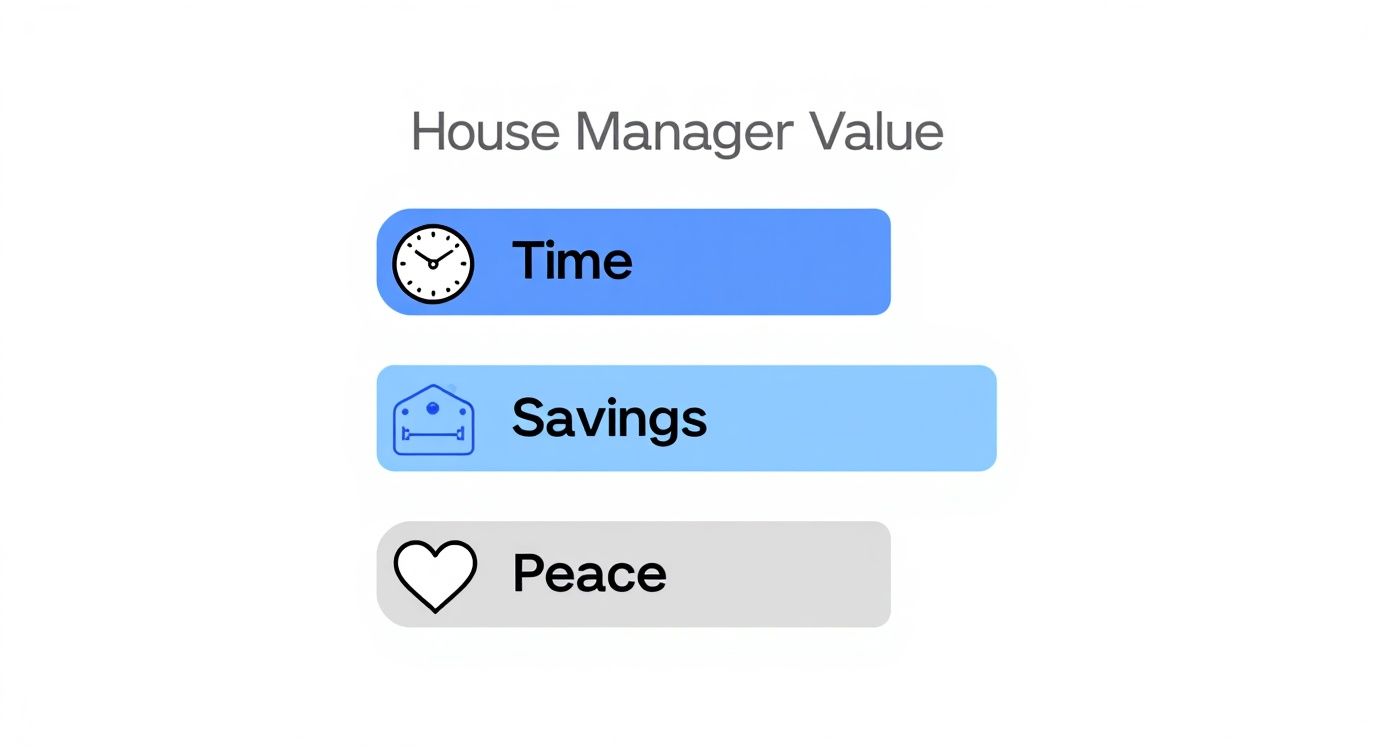
As you can see, their contribution goes far beyond ticking off a list of tasks—it directly enhances a family's entire quality of life.
UK House Manager Salary Guide by Experience and Location
To give you a clearer picture, it’s useful to see how salaries can shift based on experience and the specific demands of the role. For a bit of perspective, the compensation for a professional running a vast, multi-residence estate for an ultra-high-net-worth (UHNW) family will be in a completely different league to that of a manager in a more standard high-end home.
Here’s a breakdown of what you can expect to offer based on experience and location.
| Experience Level | Typical UK Salary Range | London & High-Wealth Area Range | UHNW Estate Specialist Range |
|---|---|---|---|
| Mid-Level (3-5 years) | £45,000 – £60,000 | £55,000 – £75,000 | N/A |
| Senior (5-10 years) | £60,000 – £85,000 | £75,000 – £100,000 | £100,000 – £120,000 |
| Elite/Expert (10+ years) | £85,000+ | £100,000 – £150,000 | £120,000 – £200,000+ |
This table provides a solid benchmark for budgeting, ensuring you can make a competitive offer that attracts the right calibre of candidate for your household's needs.
Ultimately, setting fair and competitive compensation is the first step in building a long-term, respectful relationship with the professional who will essentially become the CEO of your home. It shows you value their expertise and ensures you attract candidates with the dedication needed to truly make a difference.
How to Hire the Right House Manager
Finding the perfect house manager is less about a flawless CV and more about character and connection. When you're hiring for a role this personal, the process has to go deeper than just experience. You’re not just filling a position; you’re searching for a trusted partner to run your home.
The journey starts with a job description that truly reflects your household’s unique personality. Forget generic templates. This document needs to paint a clear, honest picture of your family’s rhythm, your expectations, and the specific challenges the manager will face. Being upfront from the very beginning helps attract candidates who are a genuine fit, saving everyone a great deal of time and effort.
Crafting a Job Description That Resonates
A strong job description does more than just list duties; it sets the tone for the entire professional relationship. Instead of simply writing "manage vendors," you could describe the kinds of projects they'll handle, whether it's overseeing a garden renovation or liaising with fine art restorers. This level of detail helps a candidate truly visualise themselves in the role.
Your description should clearly spell out:
- Household Culture: Are you a formal, traditional household or a more relaxed, modern family?
- Key Responsibilities: Detail the core duties with specific, real-world examples relevant to your life.
- Essential Qualities: Emphasise the soft skills that matter most to you, such as unwavering discretion, proactivity, and emotional intelligence.
Conducting Interviews That Reveal Character
Once you’ve got a shortlist, the interview is your chance to look beyond the CV. The real goal is to understand how a candidate thinks, solves problems, and handles pressure. Instead of asking stale, predictable questions, try presenting them with realistic scenarios they might actually face in your home.
For instance, you could ask: "Imagine we're returning from a long trip, and you discover a significant water leak in the kitchen just hours before we land. What are your immediate next steps?" Their answer will tell you far more about their composure, problem-solving skills, and communication priorities than a simple question about their past experience ever could.
Remember, this stage is a two-way street. Encourage candidates to ask questions about your family’s lifestyle and how you prefer to communicate. The very best candidates will be interviewing you just as much as you are interviewing them to ensure the fit is right for both sides. For anyone new to this, working with specialist household staff recruitment agencies can offer invaluable guidance and access to a pool of pre-vetted professionals.
Setting the Stage for Success from Day One
The final—and arguably most critical—phase is onboarding. A successful start is built on a foundation of crystal-clear expectations and open communication. Never assume your new manager just knows your preferences. A thorough walkthrough of the property, proper introductions to other staff, and a clear outline of daily, weekly, and monthly priorities are absolutely essential.
From my experience, the first month is a period of mutual adjustment. It's about establishing trust and building a rhythm together. Empower your new house manager by giving them the autonomy to succeed, but remain accessible for guidance. This balance fosters respect and sets a positive tone for a long-lasting professional relationship.
It's also worth noting that the house management profession in the UK has distinct wage structures. The demands of the job are often influenced by location, with recent surveys showing that house managers in London's affluent suburbs command higher salaries. For example, a Central London house manager can expect to earn around £57,500 annually, reflecting the complexity and demands of roles in the capital. You can explore more about average house manager salaries and regional differences on Reed.co.uk.
By focusing on cultural fit, character, and a supportive start, you move beyond just hiring staff and begin to build a partnership founded on mutual trust and respect.
Got Questions? Let's Talk Specifics
It’s completely normal to have questions when you’re thinking about bringing a house manager on board. After all, it’s a big step. I find many clients ponder the same things, so let’s get into a few common queries.
How much should I delegate at the start?
This is a great question. You don't want to overwhelm them, but you also want to see what they can do. A good rule of thumb is to begin with the repeatable, system-driven tasks. Think about things like managing the weekly grocery deliveries, overseeing the laundry schedule, or coordinating with the gardeners.
Once they have those systems running like clockwork, you can start handing over the bigger, more complex responsibilities, such as managing staff rotas or handling vendor payments.
Is there a specific dress code?
This really comes down to the culture of your home, and it varies enormously from one household to another. A traditional, formal estate might have a specific uniform in place. On the other hand, a busy, modern family home might be perfectly happy with smart, professional clothing.
The key is to be crystal clear about your expectations during the interview process. It prevents any awkwardness down the line and makes sure everyone is on the same page from day one.
Does a house manager also look after the children?
This is a common point of confusion. While some house managers may have experience with children and can certainly help out in a pinch, their core focus is on running the household, not providing dedicated childcare.
If you need significant, one-on-one care for your children, the best solution is almost always to hire a professional nanny. The two roles can then work brilliantly alongside each other to create a seamless, supportive environment for your family.
Finding the right professional to manage your home is about more than just logistics; it’s about enhancing your quality of life. At Superstar Nannies, we specialise in placing elite, fully-vetted house managers in discerning households worldwide. Let us find the perfect match for your home.